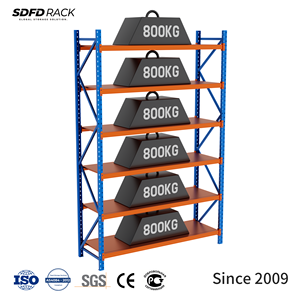
Factory-Direct Catalog
Heavy-Duty Adjustable Racking Systems
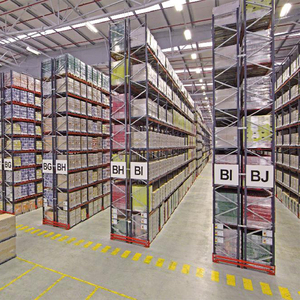
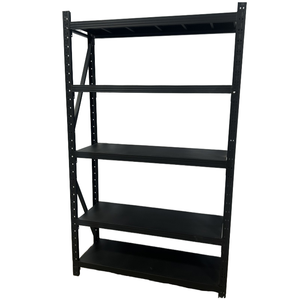
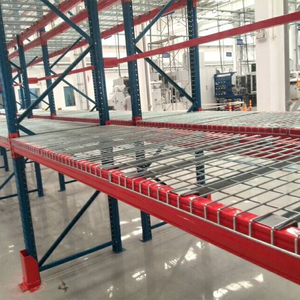
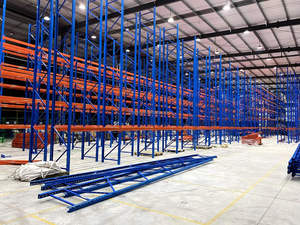
Engineered for maximum spatial yield, dynamic structural elasticity, and operational safety across cold-chain logistics, e-commerce fulfilment hubs, and automotive manufacturing.
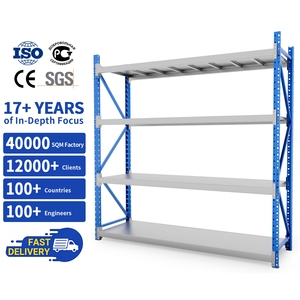
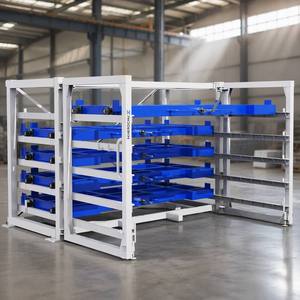
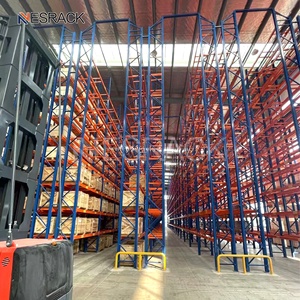
Authoritative Engineering
Enterprise Strengths: Why We Lead China's Racking Export Sector
Combining rigorous metallurgic engineering, proprietary CNC cold roll-forming capabilities, and complete turnkey export compliance for North America, Europe, and Asia-Pacific markets.
Full-Chain Structural Engineering
Our internal technical department utilizes custom FEA (Finite Element Analysis) to simulate seismic vulnerabilities, uneven live distributions, and beam deflection under European EN 15512 and US RMI MH16.1 specifications.
Free 24h 2D/3D CAD Layouts
Procurement transparency starts before financial commitment. We deliver comprehensive AutoCAD floor configurations, structural elevations, and volumetric 3D renders calculated in both metric and imperial measurements within 24 hours.
Certified ISO & CE Quality Gates
Fabricated using certified Q235B and Q355B high-tensile structural coil. Components undergo a continuous 10-stage preparation process, including automated shot-blasting, pickling, phosphating, and electrostatic powder curing.
Engineering Whitepaper
Industrial Pallet Racking Architecture & Selection Criteria
Selecting an adjustable racking infrastructure requires balancing spatial volumetric efficiency with operational cycle time. When configuring modern distribution facilities, logistics engineers categorize rack dynamics across selectivity, density, and retrieval accessibility:
| Racking Topology | Floor Utilization Ratio | Selectivity Profile | SKU Density Index | Handling Mechanism | Capital Investment Factor |
|---|---|---|---|---|---|
| Selective Pallet Racking | 35% - 40% | 100% Immediate | Moderate | Standard Counterbalance / Reach | Optimal / Low Baseline |
| Double-Deep Configuration | 45% - 55% | 50% (FILO / 2-Pallet Deep) | High | Pantograph / Deep-Reach Truck | Economical Mid-Tier |
| Drive-In / Drive-Through | 65% - 75% | Low (Lane-Restricted) | Ultra-High | Drive-in Forklift Clearance | Moderate / High Density |
| Push-Back Cart Systems | 55% - 65% | Lane-Facing Selectivity | High (2-6 Deep) | Gravity Nesting Push/Roll | Upper Mid-Tier |
| Pallet Flow (Gravity Roller) | 70% - 80% | FIFO Sequential | Maximum Continuous | Separated Load / Unload Bays | High Dynamic Return |
| Radio Shuttle Automation | 80% - 85% | FIFO / LIFO Agile Software | Maximum Automated | Semi-Automated Robotic Carrier | Advanced ROI Deployment |
Structural column profiles dictate maximum load-bearing ceilings. While 80x60mm uprights support lighter pallet distribution (up to 8,000kg frame capacity), demanding automated environments utilize 120x95mm Omega cold-rolled uprights with material thicknesses of 2.5mm to 3.0mm, achieving overall structural frame ratings exceeding 24,000kg.
Logistics Evolution
Future Procurement Trends in Industrial Storage (2025–2030)
The global warehousing landscape is undergoing unprecedented transformation dictated by urbanization, micro-fulfillment demands, and supply chain reshoring. Global procurement directors must align storage system purchases with four pivotal market trends:
1. Automation-Ready Hybrid Systems
Static storage is being retrofitted for automation. Modern procurement requires racking channels capable of accommodating autonomous mobile robots (AMRs), automated guided vehicles (AGVs), and vertical radio shuttle tracks with millimeter-exact dimensional tolerances.
2. Cold-Chain Resilient Metallurgy
Pharmaceutical and frozen fresh grocery sectors demand zero-embrittlement structural profiles. Racking systems for environments running as low as -30°C utilize specialized micro-alloy additions and impact-resistant coatings that prevent premature micro-fissuring.
3. Circularity & Modular Demountability
Volatile SKU profiles demand fluid warehouse reconfigurability. High-efficiency logistics hubs are abandoning custom-welded permanent structures in favor of modular, boltless interlocking connection systems with universal multi-pitch adaptability.
Strategic Guidance
Frequently Asked Questions: Global Industrial Procurement
Essential engineering, logistics, and compliance factors for international supply chain directors procuring racking systems directly from China.
Q1: How does Chinese Q235B/Q355B steel compare to ASTM structural grades?
Chinese national standard Q235B is metallurgically and mechanically equivalent to ASTM A36, demonstrating high ductility and a yield strength of 235 MPa. Q355B corresponds directly to ASTM A572 Grade 50 (yield point of 355 MPa), delivering enhanced strength-to-weight ratios essential for seismic zones and multi-tier structural mezzanine columns.
Q2: What certifications are required for US and European regulatory compliance?
For European installations, systems must comply with EN 15512, EN 15620, and carry valid CE structural marking. In North America, manufacturers must fabricate in compliance with ANSI/RMI MH16.1 specifications, providing verified calculation packages signed by licensed Professional Engineers (PE) to satisfy municipal building permitting.
Q3: How do you optimize ocean container stuffing to eliminate transit damage?
Racking components are bundled using automated steel-strapping machines with high-density corner guards. Uprights are nested on customized timber saddles, beams are interlocked on dedicated runner pallets, and delicate accessories are packed in sealed corrugated steel cages. All containers are moisture-controlled using desiccant blankets to prevent oxidation.
Q4: Can your engineering team integrate existing 48x40 GMA pallets and European standard EUR/EPAL?
Yes. We customize beam clear spans and frame depths precisely to the load footprint. For standard 48"x40" GMA pallets, a 42" deep frame with 96" or 108" beams provides optimal 3" overhangs; for 800x1200mm Euro pallets, 1100mm frame depths ensure uncompromised load transfer directly onto structural beam flanges.
Q5: What are the lead times from CAD approval to port dispatch?
With our monthly 30,000-ton capacity, standard selective pallet rack roll-forming and powder-coating cycles average 15-22 business days for 3 to 10 container deployments (40HQ). Custom engineering layouts with third-party calculations take 24 to 48 hours for preliminary revisions.
Q6: How is electrostatic powder-coat adhesion verified before shipment?
Every production batch is tested in accordance with ASTM D3359 cross-hatch tape adhesion standards and tested for coating thickness (averaging 60-80 microns). Salt spray test reports (exceeding 500 hours neutral salt spray compliance) can be supplied alongside physical Mill Test Certificates (MTC) for each steel coil lot.
Ready to optimize your warehouse floor plan with engineering-certified racking?
Inquire Now