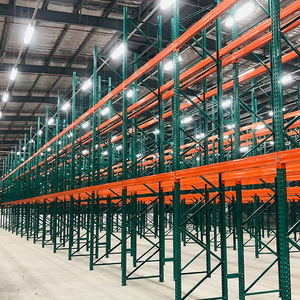
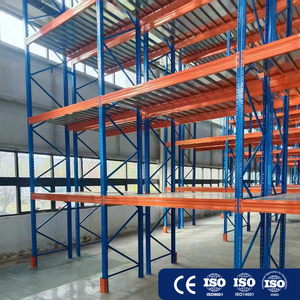
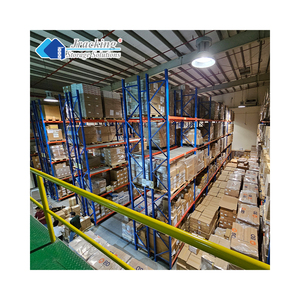
Heavy Duty Steel Single-Depth / Double-Depth Selective Pallet Racks CE Certified Corrosion Protection Standard Wide Aisle Full
- 100% SKU Access
- 1,000–5,000 kg / Level
- Epoxy-Polyester Coating
Explore our precision roll-formed warehouse storage systems. Designed for selective single/double-depth racking, high-density drive-in channels, cantilever canting beams, and specialized euro plastic pallet interfaces across global logistics hubs.
Direct factory production eliminates intermediary price compounding while guaranteeing traceable metallurgy and compliance with international racking standards: EN 15512, FEM 10.2.02, and RMI MH16.1.
We source prime hot-rolled and cold-formed coil stock directly from state-owned steel mills, providing certified Q235B and high-yield Q355B grades. Each batch is mill-tested with 3.1 inspection certificates guaranteeing yield strength, tensile elongation, and chemical carbon equivalent values.
Equipped with 18-stage CNC progressive roll-forming mills, automated hydraulic piercing tables, and high-frequency robotic welding units. Upright column cross-sections feature multi-fold omega geometry engineered to eliminate torsional buckling under heavy axial loads.
All structural members undergo an intensive pre-treatment line featuring degreasing, multi-stage acid pickling, zinc phosphating, and deionized water rinsing before entering our automated electrostatic powder-coating ovens, yielding a tough 60–80µm protective shell.
Our dedicated engineering department produces custom AutoCAD layouts, finite element stress models (FEA), and 3D architectural renderings within 24 hours of specification submittal. Calculations include imperial (lbs/ft) and metric (kg/mm) tables ready for engineer-of-record (EOR) sign-off.
Racks are packed using structural timber dunnage, polyethylene moisture barriers, and heavy-gauge steel banding to prevent shipping damage across ocean transit. Bundle dimensions are optimized to max-out both weight (payload) and cube in standard 40ft High Cube containers.
Global supply chain disruptions, warehouse land premiums, and carbon border adjustments (CBAM) are rapidly redefining commercial racking procurement criteria for the coming decade.
Procurement is pivoting from basic selective racking toward automation-ready modular structures. Modern facilities require beam tolerances within ±1.0mm, standardized anchor bolt layouts, and high-precision runout tracks capable of accommodating Autonomous Mobile Robots (AMRs), Four-Way Radio Shuttles, and automated crane inserters.
Municipal building inspectors and global insurers increasingly demand compliance with stringent seismic criteria (ASCE 7, Eurocode 8, and RMI MH16.1). Buyers now prioritize oversized baseplates, slotted shim systems, and moment-resisting beam-to-column connections that dissipate kinetic seismic loads without progressive collapse.
With the European Union's Carbon Border Adjustment Mechanism (CBAM) and corporate Scope 3 emissions commitments taking center stage, enterprise procurement directors require scrap-based electric arc furnace (EAF) steel documentation, lead-free powder coatings, and lifecycle assessment (LCA) environmental transparency.
The global boom in biological pharmaceuticals, frozen food processing, and prepared meal logistics has driven energy costs per refrigerated cubic meter to record highs. High-density semi-automated drive-in and shuttle systems reduce the thermal envelope footprint by 40–60% compared to conventional reach-truck aisles.
| Racking Topology | SKU Selectivity | Space Utilization | Handling Equipment Required | Optimal Industry Application |
|---|---|---|---|---|
| Selective Pallet Racking | 100% (Direct Access) | 40% – 50% Footprint | Standard Counterbalance / Reach Truck | General 3PL, FMCG, Multi-SKU E-Commerce |
| Double Deep Racking | 50% Immediate Access | 60% – 65% Footprint | Deep-Reach Pantograph Forklift | Cold Storage, Bulk Goods, Mid-Velocity SKUs |
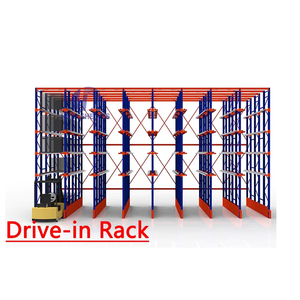
| Drive-In / Drive-Through | LIFO / FIFO by Lane | 75% – 85% Footprint | Standard Counterbalance (Drive-In Rail) | Seasonal Harvest, Beverage Bottling, Raw Materials |
| Radio Shuttle Automation | Configurable LIFO/FIFO | 85% – 92% Footprint | Radio Shuttle Cart + Standard Forklift | Deep Freeze (-30°C), Meat Processing, High-Volume DCs |
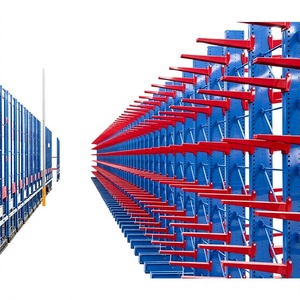
| Heavy-Duty Cantilever | 100% Side Access | Variable / Open Span | Side Loader, Multi-Directional Truck | Timber, Extrusions, Steel Coil, PVC Pipe |
Clear, technically rigorous answers to the critical structural, regulatory, and logistics questions faced by procurement managers and structural engineers.
CE marking for structural steel pallet racking falls under the European Construction Products Regulation (CPR 305/2011/EU) and harmonized structural standard EN 15512 (Steel static storage systems – Adjustable pallet racking systems – Principles for structural design), alongside EN 15620 (Tolerances, deformations and clearances) and EN 15635 (Application and maintenance of storage equipment). For North American imports, designs are verified against ANSI/RMI MH16.1 specifications. Our manufacturing lines maintain Certificate No. 2435-CPR-8605159, certifying factory production control (FPC), steel grade conformity, welding procedures (EN ISO 15614-1), and certified non-destructive testing (NDT) records.
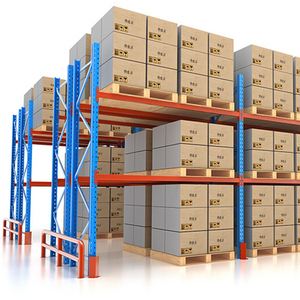
Load calculation is based on limit state design philosophy adhering to FEM 10.2.02 and EN 15512 codes. The deflection of a pair of beams under uniformly distributed design load (UDL) is structurally restricted to a maximum serviceability limit of L/200 (where L is the clear span distance between uprights). Furthermore, safety factors of 1.4 on dead loads and 1.5 on dynamic operational live loads are applied. Every beam design incorporates an engineered connector claw fitted with an automated high-tensile locking safety pin that resists a minimum upwards dislodgment force of 5.0 kN, preventing accidental beam disengagement during high-speed forklift pallet extraction.
Yes. Every commercial project includes comprehensive engineering packages consisting of AutoCAD 2D general arrangement layouts, elevation profiles, frame cross-sectional geometry, anchor bolt embedment shear-and-pullout calculations, and finite element moment diagrams. These calculations are fully formatted with imperial and metric load schedules, allowing your local registered Professional Engineer (PE) or Engineer of Record (EOR) to verify seismic site response parameters (Ss, S1, Site Class) and quickly apply regulatory stamps for municipal construction permitting.
Q235B offers a nominal yield strength of 235 MPa and ultimate tensile strength of 370–500 MPa, with excellent cold-bend formability and ductility, making it ideal for standard beam lengths and standard pallet weights up to 2,000 kg per level. Q355B (comparable to European S355 and ASTM A572 Grade 50) delivers an elevated yield strength of 355 MPa and tensile strength of 470–630 MPa. We employ Q355B specifically in tall heavy-duty upright frames (exceeding 8 to 12 meters in height), seismic base frames, high-load drive-in cantilever arms, and mezzanine main support columns to increase load-bearing capacity without increasing component dead weight.
Upright frames and horizontal beams are bundled on precision-dimensioned timber dunnage using heat-treated ISPM-15 compliant wood suitable for strict international phytosanitary customs inspections. Heavy steel strapping with edge protectors prevents chafing, while heavy-gauge polyethylene waterproof shrink wrap insulates against marine ocean condensation (container sweat). Small accessories such as base plates, row spacers, shims, and safety locking pins are packed in heavy-duty wooden crates with clear packing lists and barcode IDs tied to container packing manifests, ensuring effortless inventory reconciliation upon jobsite arrival.
Submit your warehouse footprint, clear ceiling height, pallet dimensions, and operational weight parameters. Our engineering department delivers a complimentary 2D/3D CAD layout and itemized FOB/CIF quotation within 24 hours.