 CE EN 15512
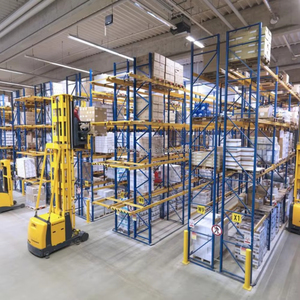
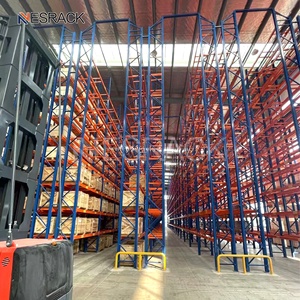
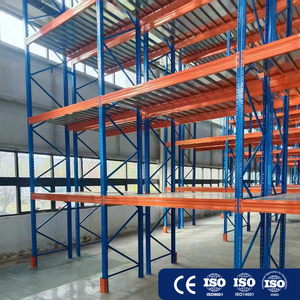
Custom Euro Very Narrow Aisle Racking System (VNA) Galvanized Narrow Pallet Solution
Hot-Dip Galvanized / Powder Coated
Aisle: 1,600-1,800mm
Height up to 15m
Manufactured using cold-rolled high-tensile Q235B and Q355B structural steel, our racking assemblies are rigorously load-tested and surface-treated through electrostatic polyester powder coating to withstand heavy mechanical impact and severe industrial cycles.
CE EN 15512
 ISO 9001:2015
 CE Certified
 RoHS Tested
 CE Structural
 ISO 9001
 EN 15620 Compliance
 CE Certified
Modern distribution infrastructure demands high mechanical durability, zero-failure structural connection integrity, and absolute compliance with international life-safety standards. Founded in 2001, Guangzhou HEDA Shelves Co., Ltd. has grown into an internationally verified manufacturer and exporter of warehouse storage systems. Operating from an integrated 30,000 m² (approximately 323,000 sq ft) manufacturing campus staffed by more than 300 experienced engineers, welders, and logistics planners, HEDA processes up to 30,000 metric tons of prime carbon steel monthly.
For cross-border engineering contractors, third-party logistics (3PL) providers, and industrial supply chain directors, selecting a manufacturing partner requires third-party verifiable pedigree. Our production facilities hold accredited ISO 9001:2015 Quality Management System Certification (No. 18624Q00169R0M) and official CE Structural European Conformity Certification (CE Marking No. 2435-CPR-8605159), strictly complying with European Racking Federation (ERF) codes, FEM 10.2.02 standards, and EN 15512 specifications. In the United States and Canada, our load tables and structural calculations are issued in imperial units (lbs, inches, feet) ready to support professional review by your local Engineer of Record (EOR) for municipal building permits and seismic site-class classifications (ASCE 7, RMI ANSI MH16.1).
Technical Guarantee: Every steel batch utilized in HEDA racking systems is certified for chemical composition and tensile strength (yielding ≥ 235 MPa for Q235B and ≥ 355 MPa for Q355B). Automated punching lines maintain continuous beam-pitch dimensional tolerances within ±0.5 mm, ensuring exact upright plumbness and structural stability under dynamic forklift impacts.
Global warehouse footprints are pivoting from basic horizontal floor staging to high-bay, semi-automated, and robotic micro-fulfillment centers. Understanding these evolving dynamics protects procurement teams against premature structural obsolescence.
Escalating urban industrial real estate costs are forcing operators to compress aisle widths from standard 3.8-meter counterbalanced corridors down to 1.6-meter Very Narrow Aisle (VNA) or automated pallet-shuttle configurations. Racking uprights must now be engineered with higher structural stiffness, ultra-tight deflection tolerances, and integrated guide rails to interface smoothly with autonomous reach trucks and Automated Guided Vehicles (AGVs).
Municipal planning authorities across North America, Europe, and the Pacific Rim enforce strict seismic bracing designs. Contemporary racking procurement mandates structural documentation confirming non-linear pushover analyses, baseplate anchorage shear capabilities, and moment-resisting beam connector safety pins. Specifiers increasingly reject uncertified open-market steel in favor of third-party verified suppliers.
Enterprise sustainability frameworks (Scope 3 carbon reduction) require manufacturers to supply environmentally responsible components. Modern lines deploy closed-loop, non-heavy-metal phosphating with heavy metal-free TGIC polyester powder coatings cured under natural gas infrared ovens, providing salt-spray corrosion resistance exceeding 500 hours without toxic effluent release.
Evaluate core structural racking classes against key procurement metrics: warehouse cubic volume efficiency, SKU access profile, handling equipment prerequisites, and total initial CapEx.
| Storage Racking System | Aisle Clearance Req. | Cubic Space Utilization | Selectivity Level | Inventory Principle | Engineering Steel Grade |
|---|---|---|---|---|---|
| Selective Pallet Racking | 3,000 – 3,800 mm | 35% – 45% (Standard) | 100% Direct Access | FIFO / LIFO Adaptable | Q235B / Cold-Formed |
| Very Narrow Aisle (VNA) | 1,600 – 1,850 mm | 55% – 65% (High) | 100% Direct Access | FIFO / LIFO Adaptable | Q355B / High-Tensile |
| Drive-In / Drive-Through | Lane-Driven Entry | 65% – 75% (Ultra-Dense) | Low (Batch SKUs) | Strict LIFO (Drive-In) | Q235B / Heavy Upright |
| Push Back Racking (Nested Carts) | Standard Counterbalance | 60% – 70% (High) | Medium (Per Lane) | LIFO System | Q235B + Roll Rails |
| Gravity Pallet Flow | Split Infeed/Pick Face | 70% – 80% (Dynamic) | High Per Channel | Strict FIFO Rotation | Q235B + Steel Rollers |
| Semi-Automated Radio Shuttle | Standard Forklift Access | 80% – 88% (Max-Density) | Automated Deep Lane | Dual FIFO / LIFO | Q355B High-Precision |
| Multi-Tier Mezzanine Floors | Custom Human/Cart Aisle | Up to 200% Floor Area | 100% Hand-Pick | Continuous Manual Pick | Hot-Rolled H-Beam |
From metallurgical validation of prime coiled steel to continuous automated roll forming and dual-coat electrostatic finishing, each component undergoes rigid multi-point quality control inspections prior to container stuffing.
Prime structural coil unwound, tension-leveled, and slit to precise profile strip tolerances.
Multi-station automated high-speed presses stamp 50mm/75mm diamond or teardrop pitches within ±0.5mm accuracy.
Multi-pass progressive roll formers shape complex cold-formed uprights and interlocking step beams without micro-fracturing.
Shielded metal arc and continuous robotic wire welding attach heavy connector brackets and ground baseplates.
Steel surfaces undergo degreasing, pickling, and zirconium-phosphate chemical washing to eradicate mill scale and oxidation.
Automated reciprocal spray guns apply 60–90μm thermosetting polyester-epoxy powder uniformly across every crevice.
Continuous ovens bake products at 180°C–200°C, generating high surface hardness, scratch resistance, and adhesion.
Laser dimension testing, coating thickness gauges, bundle-banding with corner protectors, and container dunnage optimization.
Addressing the technical, regulatory, and logistics questions faced by procurement managers, industrial project integrators, and distribution center executives.
Send us your warehouse CAD floor plan, clear building ceiling heights, pallet dimensions, and operational forklift parameters. Our technical engineering division will generate a complimentary structural layout, complete seismic load ratings, and a landed FOB/CIF project quote within 24 hours.