High-Density Storage & Heavy-Duty Racking Systems
Explore our core export-grade storage configurations. Engineered from Q235B/Q355B structural steel, coated with electrostatic powder finishes, and manufactured under stringent CE compliance.
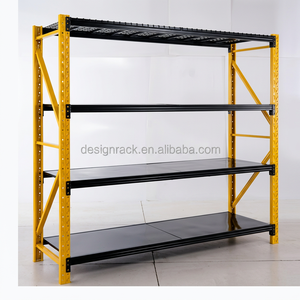
Mobile Wide Span Storage Racks Light Duty Racks For Warehouse Stainless Building Materials Tool Shelf Rack
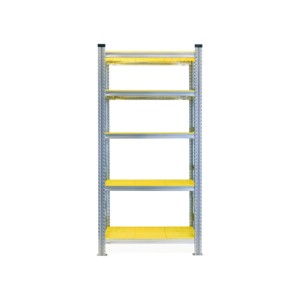
Factory Price 5-Layer Adjustable Galvanized Steel Plastic Shelving Stackable Rack 9006002500mm 150kg Load Capacity for
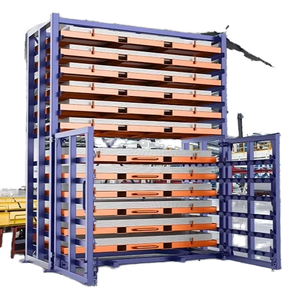
Heavy Duty Forklift 5 Layer Drive-In Steel Plate Sheet Metal Storage Rack Pallet Racking System with Corrosion Protection
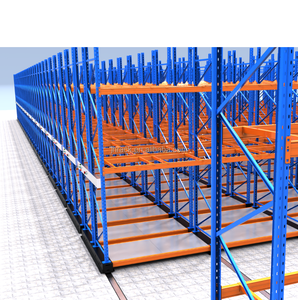
Corrosion-resistant Automatic Electric Mobile Pallet Racking Warehouse Shelves Mobile Rack System for Cold Room Storage
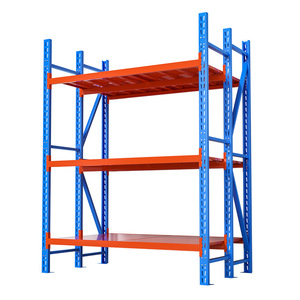
Steel Boltless Heavy Duty Rack System with Corrosion Protection for Warehouse Storage
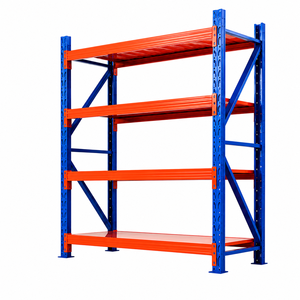
Easily Assemble Garage Storage Racks 4 Layers Long Span Shelving Rack Set
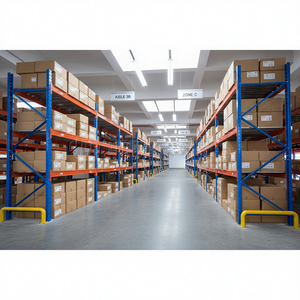
Wholesale Warehouse Racking System Heavy Duty Metal Iron Shelving Warehouse Storage Push Back Push Back Pallet Racking Systems
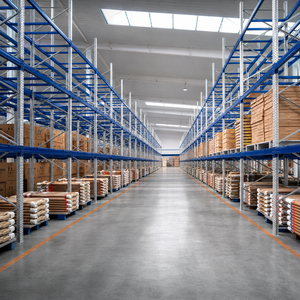
Installation Free Heavy Duty Pallet Racking System Industrial Racks Steel Warehouse Rack System Boltless Adjustable
Engineering Teardrop Racking Systems: Structural Physics, Punch Geometry & CE Harmonization
In the landscape of modern supply chain infrastructure, the Teardrop pallet racking profile stands as the undisputed benchmark for selective storage across North America and increasingly within international logistics hubs. Originally conceived to provide tool-less, gravity-assisted locking mechanics, the standard teardrop configuration utilizes inverted teardrop-shaped punching spaced at standard 2-inch (50.8 mm) vertical increments. While widespread interchangeability has simplified secondary procurement, global logistics directors and structural engineers must evaluate more than surface compatibility: the real differentiator lies in cold-formed yield strength, cross-sectional inertia, connection ductility, and third-party verified fabrication compliance.
As a leading CE Certified Teardrop Racking Factory & Exporter, our manufacturing plants align directly with both European standards (EN 15512:2020 for steel static storage systems, EN 1090-1 execution of steel structures) and North American structural directives (RMI MH16.1). This structural dual-qualification ensures that every upright column, roll-formed step beam, and seismic footplate engineered in our facilities withstands rigorous static bending, cyclic torsion, and dynamic forklift impact loads.
Cold-Formed High-Yield Steels
Utilizing hot-rolled continuous strip steel meeting high tensile ratings (Q235B & Q355B / ASTM A572 Gr 50), providing baseline yield strengths up to 355 MPa (51,500 PSI) for superior load-to-weight ratios.
CE Marking & CPR Compliance
Validated under Factory Production Control (FPC) Certificate 2435-CPR-8605159. Continuous raw coil metallurgical auditing, ultrasonic weld inspections, and batch-traceable test reports.
Patented Safety Pin Shear Resist
Integrated spring-steel retention lock auto-engages into the alignment hole, neutralizing beam uplift forces exceeding 1,000 lbs (4.45 kN) per connector in accordance with OSHA and RMI regulations.
Cross-Sectional Mechanics: Upright Column & Step Beam Geometries
A resilient teardrop rack begins with the cold-forming line. Standard selective systems frequently fail under accidental reach-truck impact when the upright profile lacks torsional stiffness. Our facility deploys multi-stage roll-forming roll dies (18 to 24 stations) that introduce return flanges and stiffening ribs along the profile’s open mouth, significantly elevating the section's polar moment of inertia ($J$) and warping constant ($C_w$).
For horizontal load carriers, our factory standardizes on roll-formed step beams with a 1-5/8 inch (41.3 mm) internal shelf step. This step accommodates drop-in wire mesh decks, structural crossbar pallet supports, or steel panels flush with the beam perimeter, preventing snagging during fast pallet loading. Continuous automated robotic seam-welding connects the beam tubular body to heavy-gauge 3-lug or 4-lug teardrop end connectors, eliminating stress concentrations at critical heat-affected zones (HAZ).
| Profile Component | Standard Dimensional Range | Steel Grade & Yield Strength | Deflection Limit Standard | Surface Treatment |
|---|---|---|---|---|
| Teardrop Upright Frame | 3" × 3" / 3" × 1-5/8" (Column gauges 12Ga to 16Ga) | Q355B (Fy ≥ 355 MPa / 51.5 ksi) | EN 15512 / RMI Columns L/240 | Pre-treatment + Epoxy Powder 60-80μm |
| Step Beam (Roll-Formed) | Heights: 3.0", 3.5", 4.0", 4.5", 5.0", 5.5", 6.0" | Q235B / Q355B High Tensile Strip | Strict Span Limit L/180 (Max pallet wt) | Automated Electrostatic Coating (RAL Orange) |
| Row Spacers & Struts | C-Channel / Structural Tube 1.5" × 1.5" | Q235B Structural Mild Steel | Axial compression buckling verified | Zinc Galvanized or Powder Finish |
| Seismic Footplates | 4" × 4", 5" × 7", up to 8" × 8" Baseplates (6mm-12mm) | Hot-Rolled Structural Plate Grade 50 | Anchorage shear & overturning uplift | Heavy-Duty Hot Dip Galv / Polymer Coated |
Why Tier-1 Importers & Enterprise DCs Source Direct from Our Factory
With an expansive manufacturing footprint, end-to-end metallurgical control, and decades of international freight consolidation, we eliminate brokerage overhead while delivering certified structural integrity.
Certified ISO 9001:2015 & CE Marking
Every structural export undergoes comprehensive quality control protocols. Backed by Certificate 18624Q00169R0M and CE European Conformity 2435-CPR-8605159, your operations team receives verifiable mill test reports, chemical composition analyses, and tensile yield documentation for municipal permit review.
24-Hour Free CAD Layouts & 3D Calculations
Our dedicated structural engineering team produces detailed architectural CAD floor plans, elevation views, clearance profiles, and structural load tables calibrated in imperial units (feet, inches, lbs) or metric dimensions within 24 hours of receiving your clear ceiling height, slab rating, and pallet dimensions.
Container-Optimized Bundling & Freight Loading
Structural freight costs dictate landed ROI. We utilize precision nesting techniques for upright columns and interlocking beam stacks, optimizing 40HQ ocean containers up to 26 metric tons without component damage, moisture accumulation, or bent connectors during sea transit.
Automated In-House Roll Forming & Welding
From raw uncoiling, automated high-speed punching, to multi-roll progressive bending and robotic seam welding, each step is completed within our factory walls. This vertical integration guarantees batch-to-batch hole pitch precision and eliminates third-party manufacturing delays.
Environmental Multi-Stage Pretreatment
Before surface coating, components undergo automated acid pickling, rust removal, phosphating, and deionized water rinsing. Finished with non-toxic, electrostatic thermosetting polyester powder baked at 200°C, delivering ultra-durable impact, scratch, and corrosion resistance.
Complete OEM/ODM Private Label Programs
We empower regional material handling distributors, systems integrators, and rack installers with specialized OEM manufacturing. Custom column hole spacing, proprietary footplate shapes, specialized company colors, and private-label packaging are seamlessly integrated.
Future Procurement Trends: Navigating Steel Markets, Nearshoring & Direct-Factory Sourcing
Procuring industrial racking systems over the next decade requires supply chain leaders to abandon purely transactional buying in favor of agile, data-driven procurement models. The convergence of fluctuating global steel indices, aggressive warehouse automation programs, and stringent carbon footprint disclosures is transforming warehouse equipment sourcing.
1. Direct-Mill Hedging vs. Middleman Markups
Traditional procurement cycles via multi-tier local dealerships introduce markup compounding ranging from 28% to 45% above base manufacturing and ocean logistics costs. Progressive 3PL operators and enterprise retailers are bypassing intermediaries to initiate direct relationships with large-scale CE certified manufacturing exporters. By contracting production runs backed by fixed-interval raw steel indexing (tied to Shanghai Steel or London Metal Exchange benchmarks), corporate procurement teams effectively hedge against commodity inflation while securing guaranteed factory production slots.
2. Hybrid Automation-Ready Structural Infrastructure
The standard warehouse is no longer purely manual. Modern facilities operate in a hybrid phase where traditional counterbalance and reach trucks coexist alongside Autonomous Mobile Robots (AMRs), Automated Guided Vehicles (AGVs), and automated pallet shuttles. Forward-thinking buyers are specifying teardrop uprights with enhanced dimensional tolerances (±0.5 mm variance), reinforced bottom portal framing, and laser-aligned guide rails. Specifying an automation-compatible teardrop system today preserves facility flexibility for automated storage retrieval retrofits tomorrow.
3. Full Life-Cycle Landed Cost (TCO) & Seismic Permitting Readiness
A low FOB price often masks substantial engineering hurdles if the exporter cannot supply structural documentation compatible with local building codes. In the United States and Canada, local building authorities require compliance with the International Building Code (IBC), NFPA 13 sprinkler clearance rules, and stamped structural calculations by a registered Professional Engineer (PE). Sourcing from an engineering-centric exporter that delivers certified component sectional properties ($A, I_x, I_y, S_x, S_y$) dramatically expedites the PE calculation package, reducing municipal permit lead times by several weeks.
Technological Innovations in Teardrop Racking Manufacturing
The structural storage sector is experiencing rapid technological evolution. As warehouse clear heights push beyond 40 feet (12.2 meters) to maximize vertical cubic volume, mechanical tolerances must meet unprecedented precision.
Optoelectronic CNC In-Line Punching
High-speed punch presses driven by optical laser sensors ensure pitch repeatability of ±0.2 mm over 12-meter continuous upright profiles, eliminating lock binding during field erection.
High-Polymer Pretreatment & Anti-Microbial Coatings
Zirconium nanotechnology replacing heavy zinc-phosphate baths reduces industrial chemical waste while enhancing salt-spray resistance past 500 hours for humid, unheated 3PL facilities.
Digital Twin & Strain Gauge Integration
IoT-ready baseplates pre-machined to accommodate digital strain gauge sensors enable real-time structural health monitoring, logging live load distributions and forklift impact shocks directly to WMS dashboards.
Environmental Sustainability and Low-Carbon Steel Initiatives
In accordance with global ESG mandates, our export operations prioritize certified low-embodied-carbon steel production. By integrating raw coils forged through Electric Arc Furnace (EAF) recycling routes and utilizing 100% recyclable thermosetting polyester powders with zero volatile organic compound (VOC) emissions, we help logistics developers secure LEED and BREEAM certifications for their new construction projects.
Frequently Asked Questions on Teardrop Racking Procurement
Detailed engineering, logistical, and compliance insights prepared by our senior structural engineering and export compliance specialists.
1. What distinguishes the universal Teardrop connection from European slotted or hex profiles?
2. How does CE Certification (EN 15512) apply when installing racking in North America?
3. Can your factory supply shop drawings and load rating plaques in Imperial measurements?
4. What standard beam safety factor and deflection limits do your step beams maintain?
5. What measures prevent corrosion and damage during international ocean transport?
6. How do beam step profiles accommodate wire mesh decking and pallet supports?
7. What is the typical production lead time and minimum order quantity (MOQ)?
8. How are seismic zones addressed when selecting teardrop upright baseplates?
9. Do you offer OEM/ODM customization for regional rack distributors and installers?
10. What specific data is required from our engineering team to generate a free layout and quote?
Request Your Structural Layout & Direct-Factory Quotation
Send your warehouse dimensions and pallet load requirements. Our senior application engineers will deliver an optimized CAD layout, imperial load calculations, and itemized containerized pricing within 24 hours.