Factory-Direct Racking & Industrial Storage Solutions
Engineered to rigorous European (EN 15512, EN 15620) and North American (RMI ANSI MH16.1) structural standards, every system offers load verifications in pounds and kilograms, finite element modeling, and batch-inspected high-tensile steel.
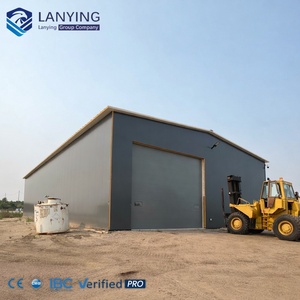
Free Design Prefabricated Steel Factory Industrial Warehouse Buildings
Integrated structural portal frames engineered specifically to accommodate selective pallet racking, automated crane runways, and mezzanine levels.
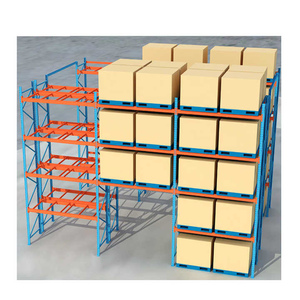
Direct Factory Sale High-Density 5-Layer Metal Drive-In Racking System
Ultra-dense LIFO pallet staging providing up to 75% footprint savings for homogeneous cold storage and high-volume manufactured goods.
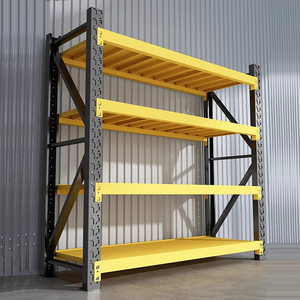
Warehouse Storage Stacking Movable Steel Truck Tire Post Pallet Racking
Modular, stackable steel stillages with interlocking corner posts engineered for dynamic warehouse staging and reverse logistics returnability.
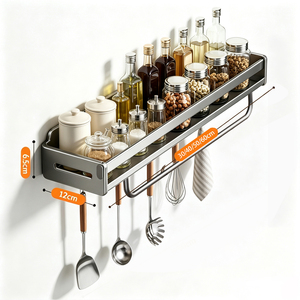
Modern Drill-Free Wall Mount Carbon Steel Multipurpose Storage Shelf
Heavy-duty formed carbon steel auxiliary shelving system coated with electrostatic anti-corrosion polymer for institutional and commercial backrooms.
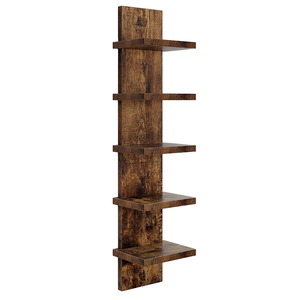
Modern 5-Story Storage Display Commercial & Industrial Archival Rack
Rigid composite-and-steel display rack engineered for office documentation hubs, retail fulfillment showrooms, and cleanroom supply staging.
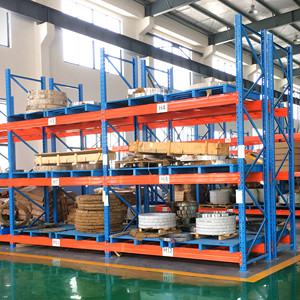
High Capacity 3-Layer Heavy Duty Adjustable Steel Storage Shelving Rack
Boltless teardrop and keyhole industrial shelving delivering up to 1,500 kg per shelf tier for heavy maintenance workshops, tools, and carton storage.
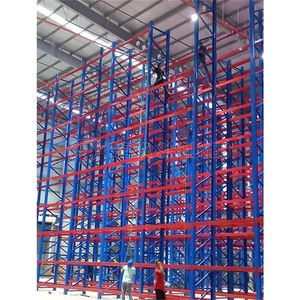
Selective Pallet Racking System Heavy Duty Industrial Storage Rack
The gold standard in 100% selective unit-load access. Features 50mm and 75mm adjustable beam pitches, interlocking safety clips, and certified 4,000 kg beam levels.
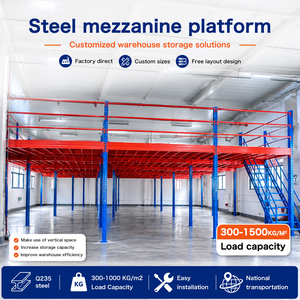
Multi-Level Steel Mezzanine Heavy Duty Platform Shelving System
Rack-supported elevated platform multiplying usable vertical cubic volume 200% to 300% without structural foundation reconstruction or building expansion.
The Engineering Mechanics of CE-Certified Selective Pallet Racking
In high-throughput supply chain networks, selective pallet racking constitutes the structural backbone of physical warehousing operations. Unlike generic, uncertified structural fabrications, certified industrial selective racking is an intricately calculated civil and mechanical assembly designed under rigorous European Construction Products Regulation (CPR 305/2011/EU). As an international exporter and direct manufacturer, our selective systems are engineered and tested strictly in conformity with EN 15512:2020 (Steel static storage systems – Adjustable pallet racking systems – Principles for structural design), EN 15620 (Tolerances, deformations and clearances), and EN 15635 (Application and maintenance of storage equipment).
Selective pallet racking offers an unmatched operational parameter: 100% direct, immediate access to every single stock-keeping unit (SKU) without requiring the repositioning of surrounding pallets. This pure selectivity is essential for third-party logistics (3PL) fulfillment centers, automotive components hubs, pharmaceutical cold storage, and omnichannel retail distribution, where inventory velocity and SKU diversity demand rapid forklift turnarounds.
Material Science & Structural Profile Integrity
Our upright columns are cold-roll-formed from high-strength structural grade steels such as certified Q235B, Q355B, and EN 10025 S355JR. The manufacturing process utilizes continuous automated 26-pass cold-roll-forming mills that ensure uniform grain boundaries, precise cross-sectional radii, and zero micro-fracturing along continuous profile curves. The cold-forming work hardening enhances the nominal yield strength ($\sigma_y$) across the profile corners, increasing the torsional rigidity of the Omega and closed-box upright designs.
Our horizontal load beams utilize twin interlocking C-profiles cold-formed together to create hermetically seam-welded box sections, or heavy-duty step beams designed for wire decking and drop-in steel panels. Beam connectors feature 3-claw, 4-claw, and 5-claw high-tensile stamped steel brackets with engineered wedge taper geometry. This taper ensures that as pallet weight increases, the mechanical interlock between beam claw and column diamond punching wedges tighter, drastically minimizing joint deformation under ultimate limit states (ULS).
Structural Comparison: Selective Racking vs. Alternative High-Density Systems
To assist logistics directors, supply chain procurement consultants, and industrial architects in selecting the optimal storage typology, the engineering matrix below outlines mechanical properties, selectivity indices, and floor space utilization factors.
| Storage System Type | Pallet Selectivity | Floor Area Density | Inventory Handling (FIFO/LIFO) | Forklift Equipment Compatibility | Seismic & Permit Complexity |
|---|---|---|---|---|---|
| Selective Pallet Racking | 100% Immediate Direct Access | Moderate (35% - 40% Building Volume) | True FIFO & LIFO Flexible | Standard Counterbalance, Reach Truck, VNA Turret | Standard EN 15512 / RMI Seismic Calculation |
| Double-Deep Pallet Rack | 50% Direct Access (2 Pallets Deep) | High (50% - 55% Building Volume) | Primarily LIFO | Specialized Pantograph Reach Truck | Moderate Load Eccentricity Review |
| Drive-In / Drive-Thru | Low (Lane-by-Lane Batch Access) | Very High (Up to 75% Floor Utilization) | Strict LIFO (Drive-In) / FIFO (Drive-Thru) | Standard Counterbalance, Narrow Chassis | Requires Internal Portal Bracing & Guide Rails |
| Push-Back Cart Racking | Medium (1 SKU per Lane Face) | High (2 to 6 Pallets Deep) | LIFO System | Standard Counterbalance or Reach Trucks | Nested Cart Incline Tolerance Engineering |
| Pallet Flow (Gravity Roller) | Medium (Pick Face Accessibility) | Ultra-High (Up to 80% Utilization) | Strict Dynamic FIFO | Standard Material Handling Trucks | Speed Controller and Dynamic Brake Calculation |
| Radio Shuttle Automation | Medium to High (Lane Automation) | Maximum (80%+ Cubic Utilization) | FIFO or LIFO Programmable | Standard Trucks Staging Robotic Carriers | Automated Rail Tolerances (EN 15620 Class 300) |
Engineering Dimensions & Operational Tolerances
Customization is fundamental to ensuring compatibility with regional unit loads (such as North American 48"x40" GMA pallets, European 1200x800mm EUR pallets, or 1100x1100mm Asian industrial containers).
Upright Frame Profiles
- Frame Depths: 800mm to 1500mm (32" - 60")
- Frame Heights: 1500mm up to 18,000mm (5' - 59')
- Steel Thickness: 1.5mm, 1.8mm, 2.0mm, 2.5mm, 3.0mm
- Column Faces: 80mm, 90mm, 100mm, 120mm, 140mm
- Pitch Adjustability: 50mm, 75mm, 76.2mm (3" Teardrop)
Beam Design & Capacities
- Profile Types: Interlocking Box, Step Beam, Tube
- Standard Lengths: 2300mm, 2700mm, 3300mm, 3900mm
- Beam Depths: 80mm, 100mm, 120mm, 140mm, 160mm
- Load Ratings: 500 kg to 5,000 kg per level
- Safety Pins: Electro-galvanized drop-lock clips
Finishing & Surface Shield
- Surface Pretreatment: 7-Stage Acid Wash & Phosphating
- Coating Type: Thermosetting Polyester Powder Coat
- Coating Thickness: 60µm to 90µm continuous
- Standard Colors: Blue (RAL 5015) & Orange (RAL 2004)
- Corrosion Testing: 500-hr Neutral Salt Spray Compliant
Future Procurement Trends in Industrial Storage Racking (2025–2030)
The global warehousing equipment procurement market is undergoing a seismic transition. Supply chain resilience, automated handling compatibility, and environmental compliance are fundamentally reshaping how enterprises procure steel rack infrastructure.
1. Decarbonized "Green Steel" & Scope 3 Audits
Global logistics providers and multinational enterprise brands are legally committing to Scope 3 carbon reduction. Procurement departments now require verified Environmental Product Declarations (EPDs) and mill test certificates documenting high recycled scrap percentages, electric arc furnace (EAF) steel sourcing, and low-VOC powder coating technologies that align with LEED and BREEAM building certifications.
2. AMR & Autonomous Forklift Interface Tolerances
Traditional human-driven counterbalance trucks tolerate minor beam deflections and floor imperfections. However, the rapid proliferation of Autonomous Mobile Robots (AMRs) and Automated Guided Vehicles (AGVs) requires strict dimensional tolerances matching EN 15620 Class 300 and 400. Procurement specifications now prioritize tighter beam deflection tolerances (e.g., L/300 or L/400 instead of standard L/200) to avoid sensor misreads during automatic pallet picking.
3. Stringent Seismic Zoning & PE Stamped Calculations
Seismic events have precipitated catastrophic rack collapses across Europe, the Americas, and the Asia-Pacific. Modern buyers no longer accept uncertified generic capacities. Procurement teams demand project-specific Finite Element Analysis (FEA) reports signed and sealed by licensed Professional Engineers (PE) or chartered structural engineers, evaluating site-specific seismic ground accelerations ($S_s, S_1$) according to IBC, Eurocode 8, or AS 4084.
4. Pre-Engineered Modular Hybrid Designs
Rising industrial lease costs have compelled warehouse operators to maximize vertical envelope usage. Sourcing strategies are actively pivoting toward hybrid systems—where ground levels maintain high-selectivity pallet racking, while upper levels are combined with integrated structural mezzanines or pick-towers for automated goods-to-person sorting and parcel consolidation.
5. Digitized Maintenance & Structural Health Monitoring
Preventative risk mitigation is driving procurement toward racks equipped with digital identity plates (QR-code asset tagging) and integrated mechanical shock indicators. Large operators now require compliance with EN 15635 annual inspection procedures, favoring manufacturers who supply certified digital structural blueprints and replacement part traceabilities.
Enterprise Strengths & Factory Capabilities: HEDA Shelves
Founded in 2001, Guangzhou Heda Shelves Co., Ltd. has evolved into an authoritative international manufacturing powerhouse, supplying precision storage infrastructure across North America, Europe, Australia, and the Middle East.
323,000 ft² Facility & 30,000 MT Monthly Capacity
Our heavy-duty production complex in Guangzhou spans over 30,000 m² (approx. 323,000 sq ft), operated by 300+ seasoned fabrication technicians and structural engineers. With high-speed automated roll-forming lines, robotized gantry welding cells, and two continuous electrostatic powder coating tunnels, we deliver an immense 30,000 metric tons of steel racking output monthly.
Certified Conformity: CE Marking & ISO 9001:2015
We maintain full third-party certified Factory Production Control (FPC) in accordance with the European Construction Products Directive. Our factory holds CE Certificate No. 2435-CPR-8605159, certified quality management standard ISO 9001:2015 (Cert No. 18624Q00169R0M), and verified RoHS environmental compliance, ensuring friction-free customs clearance and municipal permit validation.
Free 24-Hour CAD Layouts & 3D Engineering Renderings
Accelerate your project timelines with our dedicated engineering design office. By submitting your warehouse clear height, building column grid, pallet specifications, and forklift model, our design team provides optimized AutoCAD floor layouts, capacity schedules, and realistic 3D spatial renderings within 24 hours at zero cost or obligation.
Export Logistics & Container Cube-Optimization
Racking freight requires specialized container stowage engineering to prevent in-transit scratching, warping, or container volume waste. We utilize engineered dunnage, protective polymer film strapping, specialized structural steel bundling, and precision mechanical container loading ramps to maximize every cubic meter of ocean containers.
Full OEM / ODM & Tier-1 Distributor Programs
We serve material handling dealers, warehouse system integrators, and racking brands worldwide. Our engineering team accommodates custom column hole punching dies, bespoke beam connector stampings, private-label brand silk-screening, custom RAL colors, and distributor stocking discounts for continuous full-container purchases.
Frequently Asked Questions on Selective Racking Procurement
Comprehensive engineering and commercial guidance compiled by our senior structural engineers to address the most critical questions asked by logistics operators, procurement officers, and international importers.
What specific requirements must be met for a pallet rack factory to hold legitimate CE Certification?
Under the European Construction Products Regulation (EU CPR 305/2011), static steel racking falls under harmonized structural norms. A legitimate CE marking requires Factory Production Control (FPC) certification by an accredited Notified Body (such as our CE Certificate No. 2435-CPR-8605159). The factory must demonstrate traceable raw material mill test certificates (EN 10204 3.1), qualified welding procedures (WPQR) and certified welders under ISO 9606-1, calibrated roll-forming tooling tolerances, and systematic structural testing conforming to EN 15512 for beam connector moment capacity and upright stub compression.
Can HEDA Shelves engineer selective pallet racks in imperial units (lbs, inches, feet) and support PE stamps?
Yes. Over 40% of our export projects serve the United States, Canada, and Mexico. Our engineering office routinely delivers layout plans, load tables, elevation shop drawings, and safety load plaques in both imperial units (lbs per beam pair, clear heights in feet and inches) and metric units. For jurisdictions requiring local municipal building permits, we provide complete structural calculation packages (including seismic shear, baseplate anchor pullout forces, and moment frame properties) ready for final review, verification, and stamping by your local licensed Professional Engineer (PE) or Engineer of Record (EOR).
How is the maximum permissible load calculated for a selective rack beam pair?
Beam pair capacity is governed by two distinct limit states under EN 15512 and ANSI MH16.1: the Ultimate Limit State (ULS) for structural bending capacity with a statutory safety factor (typically $\gamma \ge 1.4$ to $1.65$), and the Serviceability Limit State (SLS) for vertical deflection. Under standard European and North American engineering practices, vertical beam deflection under fully rated, uniformly distributed load (UDL) must not exceed $L/200$ (where $L$ is clear beam span length), or $L/300$ for automated narrow-aisle installations. Our engineering load charts explicitly declare both the bending capacity and the deflection limit for every standard beam length.
What information is needed to obtain a free CAD layout, 3D model, and quotation within 24 hours?
To deliver an optimized, permit-ready warehouse layout within 24 hours, our engineering team requires:
1. Warehouse architectural drawing: Building dimensions, column grid locations, dock door placements, and minimum clear height to the lowest overhead obstruction (sprinklers, HVAC, or structural trusses).
2. Pallet load profile: Pallet dimensions ($W \times D \times H$ including cargo overhang) and maximum gross weight per pallet.
3. Material handling equipment: Forklift make, model, mast collapsed height, maximum lift height, and minimum right-angle stacking aisle requirement.
4. Environmental factors: Seismic geographic zone, ambient temperature (dry ambient vs. cold freezer), and concrete slab thickness/compressive strength.
How does HEDA protect pallet racking against corrosion during ocean transit and long-term facility use?
Corrosion protection begins with a rigorous 7-stage surface pretreatment line: automated alkaline degreasing, twin water rinses, acid pickling to eliminate mill scale, phosphating to create an anti-corrosive micro-crystalline conversion layer, and a deionized passivating seal. Structural components then pass through an automated electrostatic powder booth applying premium thermosetting polyester powders baked at 180°C–200°C. The resulting 60µm–90µm cured coating provides exceptional impact resistance, scratch defense, and neutral salt spray resistance exceeding 500 hours. For outdoor lumber yards or coastal ports, hot-dip galvanized finishes according to ISO 1461 are also available.
What are the key safety accessories recommended to protect selective racking from forklift impacts?
According to safety statistical studies, over 90% of warehouse rack damage occurs at aisle intersections and lower column sections below 400mm. We strongly recommend specifying:
• Heavy-Gauge Column Protectors: Formed 5mm–8mm structural steel wrap-around guards or high-visibility polymer impact dampeners anchored directly to the slab.
• End-of-Aisle Double-C Frame Barriers: Heavy tubular or rolled channel barriers anchored with heavy wedge bolts at all cross-aisle rack entries.
• Drop-In Safety Pallet Supports & Wire Mesh Decks: Welded wire mesh decking with under-beam channel supports to prevent accidental drops of substandard or undersized pallets.
What are standard ocean freight packing practices, payment terms, and delivery lead times?
Production lead time for standard project sizes (1 to 10 ocean containers) ranges between 15 to 25 business days from final CAD approval. Components are packed using protective wood-free corrugated separators, industrial bubble wraps, steel corner shields, and heavy-duty polyester tension strapping to create dense, rigid bundles optimized for 40' High Cube (40HC) container dimensions. Standard international trade terms include FOB (Guangzhou / Shenzhen / Foshan ports), CIF, CFR, and DDU/DDP for select regions. Payment terms are typically 30% T/T deposit upon engineering confirmation and 70% balance payment against clean ocean Bill of Lading (B/L) copy or confirmed Letter of Credit (L/C).