Engineered Warehouse Racking & High-Density Systems
Precision-formed cold rolled steel solutions manufactured in ISO 9001:2015 accredited facilities, engineered to exceed ANSI MH16.1, FEM 10.2.02, and European CE construction directives.
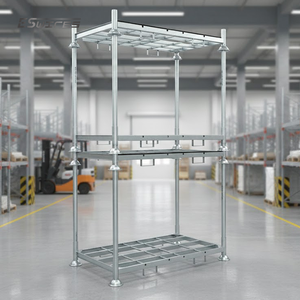
Heavy Duty Post Pallet Rack for Cold Warehouse
Specialized cryogenic cold storage post pallet systems optimized for condensed air refrigeration, high-density food perishables, and harsh sub-zero logistics operations.
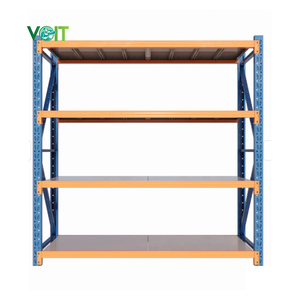
Heavy Duty Beam Racking 10-15m Storage Shelves
High-bay structural beam profiles specifically dimensioned for large-scale logistics stacking, heavy pallets, reach trucks, and high-clearance distribution centers.
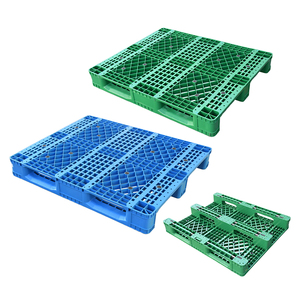
Multilevel Heavy Duty Euro Pallet Racking
Versatile multi-level industrial rack framework customized for Euro pallets, ISO containers, and multi-tier picking aisles with integrated vertical load transfer.
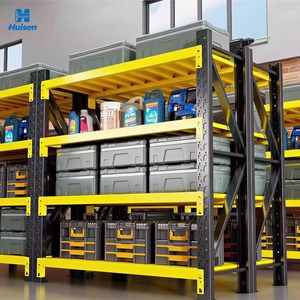
Knock Down Boltless Steel Shelving Rack
Precision interlocked, rivet-less shelving framework enabling tool-free assembly and ultra-flexible shelf spacing for maintenance storerooms, spare parts, and fast order-picking.
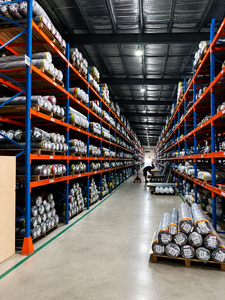
Multi-Level Heavy Duty Steel Pallet Racks
Engineered for extreme vertical volume utilization; features high-tensile column sections and safety pin-locked horizontal beams tested under dynamic industrial load cases.
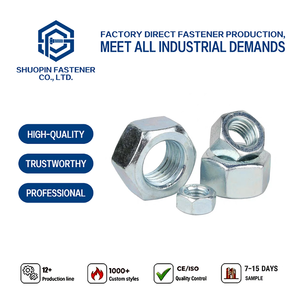
Carbon Steel Zinc Plated Hex Nut DIN934
Certified Class 8 heavy-duty metric hardware meeting DIN934 specifications, delivering seismic resistance and vibration tolerance for mezzanine frame bolted joints.
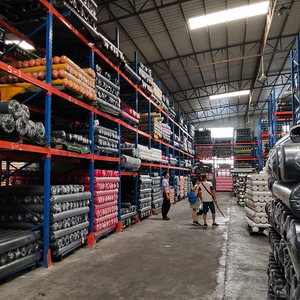
Custom Heavy Duty Rack 1000kg - 3000kg
Directly customized to customer pallet footings, building clear heights, and forklift turn radii. Configured with engineered load distribution plates and seismic anchors.
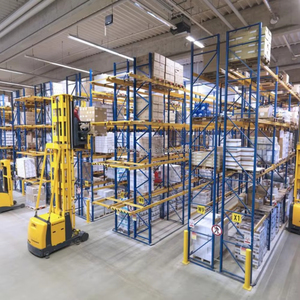
Galvanized Very Narrow Aisle (VNA) System
Ultra-compact footprint storage paired with floor-guided or wire-guided VNA turret trucks, compressing operating aisle space by 45% compared to conventional reach racks.
Technical Executive Summary: CE Certified Radio Shuttle Racking represents the pinnacle of semi-automated high-density pallet storage. Unlike passive drive-in racking that requires lift truck operators to enter dangerous structural tunnels, radio shuttle automation drives battery-powered robotic shuttles deep into high-density lanes along integrated galvanised guide rails. Compliant with Construction Products Regulation (EU) No 305/2011 (CE 2435-CPR-8605159) and European Standard EN 15512, our systems unlock 85%+ warehouse cubic utilization while eliminating forklift-induced upright frame impacts.
High-Tensile Cold-Rolled Steel Profiles
Uprights are manufactured from certified Q235B and Q355B high-grade structural steel coils, roll-formed through 20+ continuous cold-bending stations into optimized Omega profiles. This geometry yields higher section modulus and torsional rigidity while reducing unneeded tare weight, exceeding EN 15512 static stability criteria.
Robotic Carrier Propulsion & Sensing
The self-propelled shuttle platform integrates brushless DC servo traction motors, high-frequency optical photoelectric encoders, and ultrasonic collision sensors. Navigating bi-directionally at speeds up to 1.1 m/s loaded (1.5 m/s unloaded), the shuttle guarantees pallet positioning tolerances within ±2mm.
Flexible FIFO & LIFO Operational Modes
System channels can be dynamically switched between First-In, First-Out (FIFO) for batch-controlled agricultural produce, dairy, or pharmaceuticals, and First-In, Last-Out (LIFO) for uniform bulk manufacturing materials, maximizing crane and forklift throughput without structural modifications.
High-Density Intralogistics Comparison Matrix
Quantifying volumetric footprint density, cycle speed, operational safety, and lifecycle maintenance across core warehouse racking frameworks.
| Structural System | Footprint Efficiency | Pallet Retrieval Speed | Forklift Rack Collisions | Cold Storage Thermal ROI | Relative Capital Cost |
|---|---|---|---|---|---|
| Radio Shuttle System | 85% – 92% (Deep Lane) | Very Fast (Parallel Cycle) | Near Zero (Cart Stays in Channel) | Maximum (+40% Energy Saved) | Moderate (Fast Amortization) |
| Drive-In Pallet Racks | 65% – 75% | Slow (Truck enters bays) | High Risk (Frequent Impact) | Moderate | Low Baseline / High Repair |
| Push-Back Carts | 60% – 70% (2-6 Deep) | Moderate | Low-Moderate | Fair | Moderate |
| Standard Selective | 35% – 45% (Aisle Bound) | Fast (Single Access) | Low | Poor (Wasted Cubic Freezing) | Lowest Initial Only |
| Full Automated ASRS | 90% – 96% | Automated Peak | Zero | High | Extremely High (5x-10x) |
Engineered for Harsh Environments: Cryogenic Cold Stores
Sub-zero cold chain operations require specialized metallurgy and power architecture to prevent steel embrittlement and rapid battery capacity degradation.
LiFePO4 Heated Thermal Enclosures
Equipped with commercial-grade Lithium Iron Phosphate (LiFePO4) cell packs featuring internal thermostatic heating blankets. When operating inside blast freezers down to -30°C, internal battery core temperatures remain within the optimal discharge curve, delivering uninterrupted 8-10 hour shifts per charge cycle.
Cryogenic Impact-Resistant Steels
Structural cold storage uprights and rail supports are formed from steel chemistries with tight carbon-equivalent controls and micro-alloyed niobium/vanadium grain refinement, preserving Charpy V-notch impact toughness under deep refrigeration and eliminating cold embrittlement fractures.
Condensation-Proof Electronics
All on-board shuttle microcontrollers, laser ranges, optical encoders, and circuit boards receive dual-layer conformal coatings rated IP65/IP67. This prevents short circuits caused by frost condensation when shuttles are transferred between cold storage rooms and ambient loading bays.
Future Procurement Trends in Radio Shuttle Racking
Key technological transformations steering capital equipment investments in high-density warehouse storage over the next five-to-ten years.
4-Directional Shuttle Systems (4D)
Transition from standard 2-directional (forward-backward) lane movement to 4D multidirectional shuttles capable of traversing both storage channels and cross-aisles on identical tiers, drastically reducing the required quantity of vertical lifts.
WMS/WCS Native Rest API Integration
Shuttle carriers are migrating from standalone RF handheld controllers to industrial IoT networks utilizing 5G private mesh and OPC-UA protocols, allowing Warehouse Management Systems to dispatch replenishment jobs directly without human intervention.
Decarbonization & Green Warehousing
Replacing fossil-fuel forklift drive cycles inside deep storage lanes reduces warehouse CO2 footprints. In frozen logistics, shuttle racking condenses thermal escape space, reducing continuous refrigeration electrical consumption by up to 35%.
Integration with AMR / AGV Fleets
Combining the high vertical capacity of radio shuttle racking with Autonomous Mobile Robots (AMRs) that automatically deliver and pick pallets at the lane entry face, bridging floor logistics with vertical density without fixed conveyors.
HEDA Shelves Engineering & Quality Rigor
Direct from our 300,000+ sq ft manufacturing plant: certified steel sourcing, robotic welding, automated coil slitting, and electrostatic powder coating lines.
Material Traceability & QC
- Mill Test Certificates (MTC): Every steel coil is verified for yield strength, elongation, and chemical composition.
- Automated Column Punching: Precision CNC hole pitching maintains a standard 50mm / 75mm beam adjustment tolerance.
- Pre-treatment Line: 9-stage pickling, phosphating, and deionized water rinsing to ensure 500+ hour salt-spray corrosion resistance.
Certified International Standards
- CE Marking: Full compliance with EN 1090-1 and Construction Products Regulation No. 2435-CPR-8605159.
- Quality Management: ISO 9001:2015 certified design, engineering, and manufacturing process (Cert 18624Q00169R0M).
- Seismic Safety: Dynamic finite element analysis (FEA) calibrated to US IBC/RMI MH16.1 and Eurocode 8 seismic zones.
Turnkey Export & Service
- 24-Hour CAD Response: Complete structural layout drawings, isometric 3D models, and load-span capacity tables.
- Container Packing: Bundled with custom steel skids and protective wrapping to prevent shipping deformation in 40HQ ocean freight.
- Full Metric & Imperial Units: Capacity charts provided in pounds (lbs) and feet/inches for US & Canadian projects.
Radio Shuttle Racking Procurement: Expert Answers
Direct, engineering-backed answers addressing the most critical technical, operational, and financial considerations when specifying shuttle rack projects.
Radio shuttle systems require high-precision concrete floor slabs. Under European DIN 18202 (Table 3, Group 4) or American Concrete Institute (ACI 117) standards, a floor flatness specification of FF 45 / FL 35 is recommended for rack heights under 10 meters. For high-bay installations up to 15 meters, superflat floors (FF 60+) prevent rail alignment deflections under concentrated base plate point loads.
CE certification for radio shuttle systems covers two integrated domains: the structural steel framework falls under EN 1090-1 / EN 15512 (Execution of steel structures and static storage systems), while the motorized shuttle cart itself complies with the EU Machinery Directive (2006/42/EC), EMC Directive (2014/30/EU), and Radio Equipment Directive (2014/53/EU). Our systems bear CE marking 2435-CPR-8605159, verifying both load-bearing and robotic safety.
The shuttle's optical sensors detect bottom-board deflections and pallet skids. While standard Euro pallets (1200x800mm), GMA pallets (48x40in), and industrial pallets (1200x1000mm) run seamlessly on standard dual-flange rails, severely broken or split bottom boards can trigger optical safety interlocks. For mixed pallet environments, optional center-support rail wings or steel slave pallets are engineered into the channel layout.
The ratio of shuttles to pallet positions depends strictly on throughput cycles (pallets moved per hour) rather than total rack volume. In standard distribution operations, 1 shuttle can typically service 800 to 1,500 pallet positions across multiple levels via standard forklift transfer. For high-speed buffer shipping lanes or cross-docking, 1 shuttle per 300 to 500 pallet positions provides rapid multi-lane parallel replenishment.
All HEDA radio shuttle units feature an integrated mechanical rescue protocol. If an unexpected power interrupt occurs deep in a 40-meter channel, a secondary rescue shuttle or a manual motorized tow-cable adapter connects to the stalled unit. The system releases the magnetic electromechanical brake, enabling safe retrieval to the lane picking face without requiring personnel to enter the rack structure.
In ambient distribution warehouses, typical payback ranges between 18 and 28 months, driven by forklift travel reduction, increased pallet density, and reduced labor costs. In cold storage facilities (-20°C to -30°C), ROI drops significantly to 12 to 16 months due to massive energy savings per pallet position, as high-density shuttle racking eliminates up to 60% of cooled air corridors required by standard reach trucks.
Ready to Engineer Your High-Density Radio Shuttle System?
Submit your facility floor plan, clear ceiling height, pallet specifications, and throughput targets. Our senior structural engineers deliver a complete AutoCAD layout, 3D visualization, and comprehensive landed quotation within 24 hours.