High-Performance Industrial Shelving & Racking Systems
Certified for heavy payload structural resilience, seismic tolerance, and seamless integration with modern warehousing reach trucks, pallet jacks, and high-bay automation equipment.
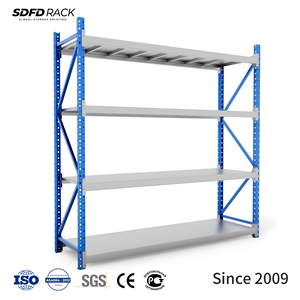
Custom 200kg 300kg 500kg Adjustable Pallet Racks Steel Heavy Duty Shelf Long Span Warehouse Shelving For E-commerce Storage
- Capacity: 200kg - 500kg / Uniform Level
- Design: 50mm Adjustable Beam Pitch
- Application: Omni-channel Pick & Pack
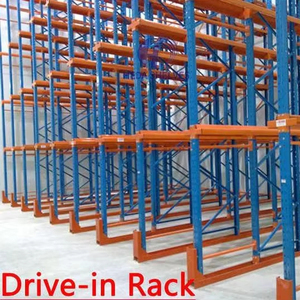
Direct Factory Sale High-Density 5 Layer Metal Drive-In Racking System For Warehouse Storage Iron/Mental Drive-In Rack
- Storage Density: Up to 80% Aisle Reduction
- Structural Rails: Cold-Formed Heavy Gauge
- Workflow: LIFO / FIFO Cold-Storage Grade

For Metal Bedside Shelf Single Tier Detachable Wall-Mounted with Cup Holder Remote Control Multi-Functional Storage Rack
- Material: Powder-Coated High Tensile Alloy
- Mounting: Zero-Wobble Fastening Bracket
- Finish: Scratch-Proof Electrostatic Polymer
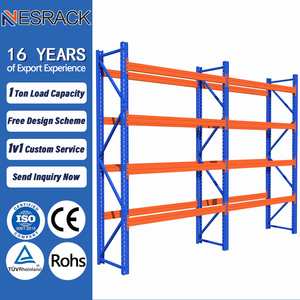
Heavy Duty Warehouse Shelving Industrial Steel Storage Rack With 5 Layers Racks For Warehouse Goods
- Layers: 5-Tier Configurable Steel Decking
- Coating: Anti-Corrosive Acid Pickled Finish
- Loading: Up to 1,500kg / Bay Capacity
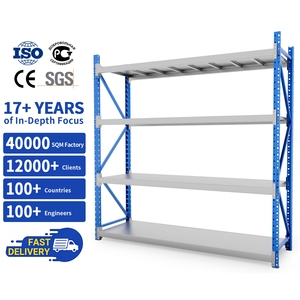
Low Price High Quality Heavy Duty Pallet Racks Industrial Selective Pallet Racking System for Medical Supply Warehouse Storage
- Accessibility: 100% Immediate Direct Access
- Standard: Compatible with 48x40 GMA Pallets
- Hygiene: Clean-Room Grade Powder Coat
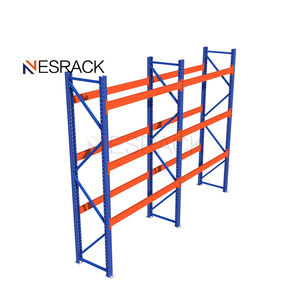
Customized Industrial Warehouse Pallet Rack Multi-Layer Adjustable Steel Shelves Units Metal Heavy Duty Selective Pallet Racking
- Uprights: Precision C-Profile Cold Formed
- Safety Locks: Automatic Snap-in Steel Pins
- Seismic: Calculated for Peak Ground Accel.
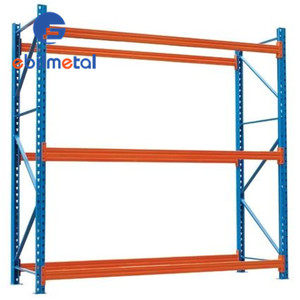
Heavy Duty Shelving Pallet Rack for Storage
- Beam Profiles: Welded Interlocking Step Box
- Baseplates: Heavy Anchor Footing Assembly
- Deflection: < L/200 Under Rated Loads
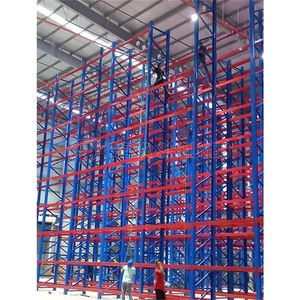
Warehouse Pallet Racking System Heavy Duty Metal Storage Rack And Rack Shelves For Warehouse
- Custom Height: Engineered up to 14+ Meters
- Aisle Design: Standard, Narrow, or VNA
- Documentation: PE-Stamped Ready Calc Packs
Future Procurement Trends in Industrial Shelving and Warehouse Racking
Procurement paradigms within global supply chain logistics are undergoing an irreversible shift. As facility lease rates climb across core European logistics clusters, North American intermodal hubs, and Southeast Asian transshipment corridors, commercial enterprise warehousing cannot afford structural inefficiency. Modern logistics directors, EPC contractors, and procurement managers are actively pivoting away from commoditized "steel per kilogram" buying mindsets. Instead, tier-one enterprises evaluate racking hardware using Total Lifecycle Cost Analysis (TLCA), structural ductility, and carbon abatement footprint.
Seismic Ductility & Dynamic Modeling
Supply chain procurement teams are elevating local seismic zone parameters from a secondary consideration to a baseline requirement. Facilities operating near the San Andreas fault lines, Cascadia subduction zones, or Mediterranean tectonic belts demand high-tensile upright steel frames cold-formed with engineered ductility reduction factors (R-values). Compliance with ANSI MH16.1, FEMA 460, and EN 1998-1 guarantees rack elasticity without sudden brittle failure during maximum considered earthquake (MCE) events.
Direct Factory-to-Jobsite Turnkey Models
Middleman distributors inflate project margins by 25% to 40% while diluting engineering communication. Forward-thinking operations source directly from heavy manufacturing campuses capable of providing custom BIM models, structural FEA calculations, and export-compliant flat packaging. Direct access to manufacturing engineers minimizes lead time from CAD sign-off to maritime container staging down to less than 4 weeks.
CBAM Compliance & Green Steel
With the full implementation of the European Union’s Carbon Border Adjustment Mechanism (CBAM), enterprise purchasers must trace embedded Scope 1 and Scope 2 emissions within cold-rolled steel coils. Sourcing from manufacturers utilizing clean continuous coil electrostatic powder-coating lines and certified recyclable metallurgical feedstock ensures zero compliance disruption across import customs.
Engineering Specification Matrix: System Selection by Operational Profile
| Racking System Classification | Structural SKU Access | Floor Space Utilization | Inventory Rotation | Target Handling Equipment | Deflection Thresholds |
|---|---|---|---|---|---|
| Selective Pallet Racking | 100% Direct Accessibility | 35% - 40% Floor Coverage | FIFO / LIFO (Flexible) | Counterbalance, Reach Trucks | ≤ L/200 Under Working Payload |
| High-Density Drive-In Racks | Deep-Lane Single Lane Access | 65% - 75% Floor Coverage | Strict LIFO (FIFO with Drive-Thru) | Narrow Mast Reach Trucks | ≤ L/250 Critical Cantilever Rails |
| Gravity Pallet Flow Systems | Front-Face Picking Only | 70% - 80% Floor Coverage | Enforced True FIFO | Standard Forklifts / AGVs | Sloped Gravity Gradient 3-4% |
| Radio Shuttle Semi-Automated | Lane-End Cart Staging | 80% - 85% Floor Coverage | Software Configurable FIFO/LIFO | Laser-Guided Forklifts / AMRs | Precision Laser Tolerances (±2mm) |
| Rack-Supported Mezzanines | Multi-Tier Pedestrian Pick | 150% - 250% Cubic Footprint | Dynamic Multi-SKU Picking | Conveyors, Vertical Lifts (VRC) | Floor Uniform Load: 300-1000 kg/m² |
Technological & Structural Developmental Trends in Industrial Storage Racks
The industrial shelving industry is experiencing a profound technological convergence. Traditional mechanical structures are transforming into digitized, highly responsive storage matrices engineered to support Automated Guided Vehicles (AGVs), Autonomous Mobile Robots (AMRs), and dense Automated Storage and Retrieval Systems (AS/RS). The following technological vectors are redefining warehouse steel fabrication:
1. Micro-Alloyed High-Yield Steels & Cold Roll-Forming Precision
Traditional structural mild steel is increasingly superseded by micro-alloyed, continuous-strip steels (e.g., Q355B, S355MC, and ASTM A1011 Grade 50). These advanced metallurgy formulations integrate micro-additions of niobium, vanadium, and titanium, drastically enhancing yield strength without sacrificing elongation properties or weldability. Through automated, multi-station continuous roll-forming lines with computer-controlled inline punching, upright column profiles achieve continuous wall thickness tolerances within ±0.05mm. The resulting closed and open multi-bend rib designs withstand substantial torsional stresses under non-uniform eccentric pallet loading.
2. Structural BIM Integration & Digital Twin FEA Modeling
Finite Element Analysis (FEA) has moved from static post-design validation to real-time generative structural configuration. Modern engineering teams model exact racking layouts within full Building Information Modeling (BIM) environments (LOD 300 to LOD 400). Engineers model non-linear moment-rotation behavior at the beam-to-column connector joints (loosening stiffness curves per EN 15512), evaluating second-order structural effects (P-Delta effects) under combined gravity, seismic, wind (for outdoor cantilever racks), and dynamic crane impact loads.
3. High-Durability Multi-Stage Pretreatment & Electrostatic Powder Coatings
In aggressive environments—such as blast freezers (-30°C), agricultural chemical depots, and coastal marine distribution centers—surface coating durability determines structural life. Leading manufacturers enforce automated 8-stage to 10-stage immersion or spray pretreatment lines, including hot alkaline degreasing, acid rust stripping, zinc-iron phosphating, and deionized water rinsing before applying thermosetting polyester or epoxy-polyester hybrid powder coatings. The cured layer exhibits zero pinholing, withstands 500+ hours of ASTM B117 salt spray testing, and prevents subsurface rust creeping along punched holes.
4. Hybrid Automation-Ready Racking Architecture
Warehouses are increasingly adopting brownfield automation. Racking frameworks are now built "automation-ready" from day one. Structural beams are manufactured with pre-punched mounting patterns to accommodate magnetic tape guidance strips, continuous reflective LiDAR navigation markers, safety light curtains, in-rack fire suppression sprinklers (NFPA 13 compliant), and sensor brackets for automated pallet alignment detection. This allows facilities to seamlessly upgrade from manual reach-truck fleets to autonomous 4-directional shuttle systems without expensive structural tear-downs.
Guangzhou HEDA Shelves: 25+ Years of Certified Heavy Structural Manufacturing
Founded in 2001, Guangzhou Heda Shelves Co., Ltd. has established itself as an authoritative global manufacturer of high-tolerance pallet racking systems, industrial longspan shelving, and multi-tier structural mezzanines. Headquartered in Guangzhou, China, HEDA operates a world-class manufacturing campus spanning over 30,000 square meters (approximately 323,000 square feet). Supported by over 300 highly qualified structural engineers, precision welders, metallurgical specialists, and global logistics project coordinators, our facility produces up to 30,000 metric tons of certified racking steel monthly.
Dual International Certifications
Our quality management and structural manufacturing protocols strictly conform to ISO 9001:2015 (Certificate No. 18624Q00169R0M) and European Union CE Marking under the Construction Products Regulation (No. 2435-CPR-8605159). We provide verified raw material mill test certificates (MTCs), RoHS environmental compliance certifications, and comprehensive third-party structural load inspection reports.
24-Hour CAD & 3D Engineering BIM Turnaround
Our in-house technical structural division eliminates engineering bottlenecks. By supplying facility clear heights, slab thickness, pallet weight distribution, and forklift operating envelopes, our engineers generate professional 2D CAD layouts, isometric 3D spatial renderings, and imperial/metric unit load distribution tables within 24 hours—fully prepared for local Professional Engineer (PE) stamping and municipal building permits.
Global Intermodal Containerized Packaging
Structural racking is susceptible to transit damage if packed haphazardly. HEDA implements custom steel nesting cradles, protective vapor-corrosion inhibiting (VCI) poly-wrap, and corner edge armor specifically optimized for 20ft and 40ft high-cube ocean freight containers. Shipped smoothly to key gateway ports worldwide (Los Angeles, Long Beach, Houston, Savannah, New York, Vancouver, Rotterdam, Hamburg, and Jebel Ali).
The HEDA Shelves 10-Step Quality-Controlled Manufacturing Pipeline
Every upright column, box beam, row spacer, and seismic footplate manufactured inside HEDA’s plant follows an uncompromised, traceable 10-step fabrication cycle:
Raw Steel Inbound
Ultrasonic thickness & chemical batch testing on Q235B/Q355B coils.
Precision Slitting
Automated slitting heads cut steel coils to exact beam & post widths.
CNC Column Punching
High-speed punch presses form teardrop or diamond slot patterns.
Cold Roll-Forming
Multi-roller forming stations fold multi-bend structural uprights.
Interlock Profile Weld
Continuous robotic seam welding on twin C-channels into box beams.
Connector Welding
Heavy steel beam end-connectors welded via dual-torch robots.
Deburring & Polishing
Mechanical blast cleaning and corner radiusing to eliminate burrs.
Phosphating Pre-Wash
Multi-bath acid degreasing and zinc-phosphating conversion bath.
Electrostatic Coating
High-voltage powder spray followed by 200°C curing oven tunnel.
Batch QC & Palletizing
Micrometer DFT coating checks, load sample testing & steel banded.
Industrial Shelving & Racks: Technical & Commercial FAQ
Everything project engineers, operations directors, and international purchasing agents need to evaluate when ordering factory-direct structural warehouse racking.
1. How do CE Certified industrial racks differ from non-certified domestic steel shelving?
2. Can HEDA supply imperial calculation packages for North American seismic and municipal permits?
3. What building and operational parameters are needed to generate an optimized CAD design within 24 hours?
4. What is the difference between Q235B and Q355B steel in structural pallet rack design?
5. How does HEDA prevent ocean freight corrosion on steel racking during trans-oceanic shipping?
6. How are pallet rack beam capacities calculated, and what safety factor is applied?
Accelerate Your Warehouse Capacity with Direct-from-Factory Engineering
Connect directly with HEDA’s structural engineering team. Get custom CAD layouts, certified load calculation packages, and factory-direct project quotes within 24 hours.