High Density
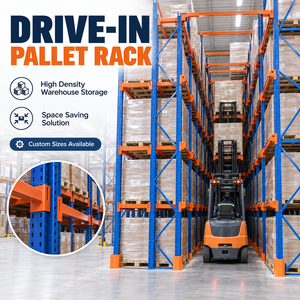
Precision-formed roll-profile storage systems designed for high-throughput distribution hubs, third-party logistics (3PL) operations, automotive spare part centers, and temperature-controlled cold facilities.
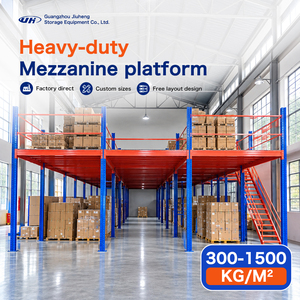
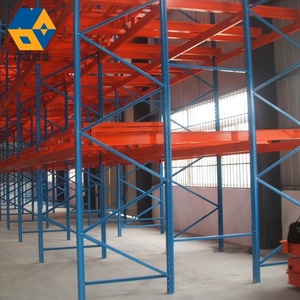
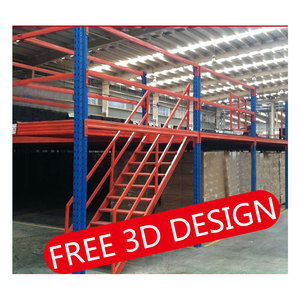
Procuring heavy-duty warehouse storage is an architectural commitment to human safety, structural resilience, and mechanical endurance. As a direct manufacturer certified under CE Certificate No. 2435-CPR-8605159 and ISO 9001:2015, Guangzhou HEDA Shelves Co., Ltd. builds to strict international codes including European Norms EN 15512, EN 15620, and American RMI (Rack Manufacturers Institute) ANSI MH16.1 specifications.
Structural integrity begins with prime coils. We select structural carbon steels Q235B and high-yield Q355B tested via ultrasonic flaw detection and spectrographic analysis. Our automated CNC multi-station continuous roll-forming lines execute cold-bending passes that progressively distribute internal stresses, preserving ductility while maximizing critical yield strength up to 355 MPa.
Racking deployed in extreme temperature zones or chemical logistics requires robust corrosion mitigation. Components undergo a fully automated 10-step surface preparation program: hot degreasing, dual acid pickling, zinc phosphating, and deionized neutralization, creating a microscopic mechanical keying layer before curing thermosetting epoxy-polyester powder at 200°C.
Our structural engineering department performs full Finite Element Analysis (FEA) on upright-to-beam connection stiffness. Upright column buckling loads, semi-rigid connection moment-rotation curves, and local profile distortion are calculated under combined vertical gravity, horizontal operational seismic accelerations (Ss and S1 factors), and forklift impact allowances.
Evaluate structural parameters, operational aisle clearance requirements, seismic suitability, and load parameters across mainstream industrial rack architectures to verify structural compatibility with your facility footprint.
| Racking Architecture | Typical Beam Capacity | Pallet Accessibility | Storage Density Rating | FIFO / LIFO Rotation | Optimal Industry Application |
|---|---|---|---|---|---|
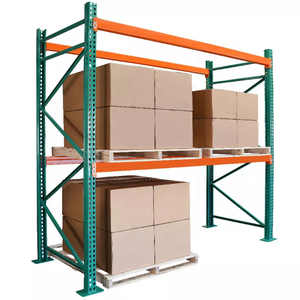
| Selective Pallet Racking | 1,000 – 5,000 kg / level | 100% Direct Immediate | Both FIFO & LIFO | High-SKU distribution, fast turnover 3PL, e-commerce fulfillment hubs | |
| Heavy Duty Drive-In Racking | 1,000 – 2,500 kg / pallet | Lane Entry Restriction | Strict LIFO (FIFO with Drive-Through) | Cold storage freezers, seasonal beverage bulk stock, uniform SKUs | |
| Push Back Pallet Systems | 1,000 – 1,500 kg / cart | Cart End Loading Face | Lane LIFO Dynamics | Intermediate SKU counts, food manufacturing, multi-lane buffering | |
| Pallet Flow (Gravity Flow) | 500 – 1,500 kg / pallet | Pick-Face Dedicated | Strict Uncompromising FIFO | Date-sensitive pharmaceuticals, perishables, fast-moving consumer goods | |
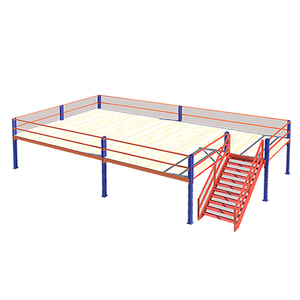
| Structural Rack Mezzanines | 300 – 1,200 kg / m² floor | Walkable Picking Levels | Multi-Tier Hybrid | Automotive spare parts, e-commerce split-case picking, workshop lofts | |
| Heavy-Duty Cantilever Racks | 500 – 3,000 kg / arm | Open Front Columnar | Random Direct Access | Structural timber, steel bar stock, extruded PVC pipes, sheet metal crates |
*Note: Structural capacities must be corroborated against local concrete slab core drills, anchor embedment depth, and site-specific seismic base shear coefficients ($V = C_s \cdot W$).
Industrial supply chains are transitioning through unprecedented automated transformations, real estate hyper-inflation, and strict ESG mandates. Modern procurement officers are abandoning generic, lightweight steel commodity purchasing in favor of structurally certified, automation-interfacing capital assets.
Traditional static selective racking is increasingly specified with automated guided vehicle (AGV) guide paths and autonomous mobile robot (AMR) under-chassis tolerances. Warehouses that deploy conventional forklifts today require beam clearances, floor flatness tolerances (DIN 18202 / ASTM E1155 F-min specifications), and rack plumbness configured for seamless future retrofit into shuttle or automated storage and retrieval systems (AS/RS).
Forward-thinking procurement teams verify rack tolerances at the factory level to ensure beam deflection never binds automated robotic sensors during optical barcode scanning or tote insertion.
Scope 3 supply chain decarbonization targets are now central to Tier-1 logistics procurement across Europe, North America, and the Asia-Pacific. Buyers increasingly favor manufacturers utilizing Electric Arc Furnace (EAF) steel coils processed with high-percentage post-consumer recycled scrap metal over emissions-intensive blast furnace routes.
Furthermore, lead-free, low-VOC TGIC-free powder formulations and water-recycle pickling pretreatment systems provide verifiable environmental product declarations (EPD) required for corporate sustainability reporting and LEED-certified warehouse accreditations.
Sourcing managers are shifting focus away from lowest-initial-bid unit pricing toward comprehensive lifecycle durability models. A substandard racking upright profile fabricated from non-certified secondary strip coil can induce floor anchor failure, severe deflection during seasonal overloading, or catastrophic collapse following minor forklift guide-post impacts.
Procurement teams demand certified structural profiles where factory-applied hot-dip galvanizing or heavy-gauge column base reinforcing gussets cut replacement downtime and repair expenditures by over 70% across a 20-year lifespan.
Mid-market trading intermediaries are rapidly being superseded by direct relationships between warehouse developers and integrated manufacturing plants. Procurement executives demand uninhibited direct access to factory structural engineers, real-time mill test certificates (EN 10204 Type 3.1), and rapid CAD / BIM turnaround within 24 hours.
Factory-direct containerized packaging optimized for sea freight significantly reduces freight cubic volume, eliminates port transshipment damage, and ensures structural assemblies arrive ready for certified installation.
From micro-alloy metallurgical advancements to sensor-integrated structural health monitoring, the industrial racking sector is evolving from passive steel frameworks into dynamic, smart structural systems.
The integration of Industrial Internet of Things (IIoT) strain gauges, piezoelectric impact accelerometers, and tilt sensors directly inside critical corner upright columns enables continuous load-bearing safety telemetry. When material handling forklifts strike column footings at speeds exceeding standard safety thresholds, instantaneous alerts are logged to warehouse management software (WMS).
Overstressed beam levels undergo predictive deflection monitoring, alerting operations before structural fatigue compromises structural equilibrium.
Through micro-alloying containing precise trace concentrations of niobium, vanadium, and titanium, contemporary cold-roll steel profiles achieve extraordinary yield strengths without sacrificing elongation or cold-bending ductility. This allows for lighter-gauge structural components that match or exceed the load capacity of traditional heavy profiles.
This structural efficiency reduces total superstructure weight by 15–22%, drastically mitigating seismic lateral forces without reducing structural safety margins under EN 15512 calculation protocols.
With the rapid expansion of pharmaceutical cold chain, ultra-low temperature logistics, and flash-frozen food processing hubs (-30°C to -60°C), conventional structural carbon steels are vulnerable to low-temperature brittle fracture. Specialized silicon-killed, fine-grained aluminum-treated steels resist ductile-to-brittle transitional failure.
Coupled with zinc-rich thermoplastic hybrid powder coatings that accommodate thermal contraction cycles without micro-cracking, modern heavy-duty racks prevent subterranean sub-film rust formation in high-humidity thaw transitions.
Rack storage design has advanced far beyond 2D CAD floorplans. State-of-the-art facilities require full BIM (Building Information Modeling) Level 2 compliance with exact parametric families compatible with Autodesk Revit and Navisworks. Racking assemblies incorporate precise spatial envelopes, structural load points, sprinkler flue clearance zones, and column deflection cones.
This allows project managers to simulate clashes with overhead HVAC, high-expansion foam ductwork, and automated crane rails months before manufacturing begins.
Answers to critical engineering, safety certification, and global shipping inquiries for warehouse operations directors, structural consultants, and purchasing leads.
CE marking under the European Construction Products Regulation (EU) No 305/2011 (Factory Production Control Certificate No. 2435-CPR-8605159) confirms that structural racking components satisfy rigorous harmonized European engineering standards, primarily EN 15512 (Steel static storage systems – Adjustable pallet racking systems – Principles for structural design) and EN 1090-1/2 (Execution of steel structures and aluminum structures).
Unlike informal manufacturer self-declarations, CE compliance requires rigorous independent third-party audits of the manufacturing plant's quality control systems. It certifies that the steel's chemical composition, weld bead mechanical penetration, column punching geometric consistency, and dynamic load tolerances adhere strictly to engineered European structural codes, establishing verified safety for industrial workers.
Seismic engineering requires calculating the fundamental vibration period of the racking superstructure along both longitudinal (down-aisle) and transverse (cross-aisle) axes. Using Finite Element Analysis software, our engineers calculate the total effective weight of the rack structure combined with product loads, applying dynamic response reduction factors ($R$ or $q$) according to regional codes such as ASCE 7, IBC Section 2209, or Eurocode 8 (EN 1998-1).
In zones characterized by high peak ground acceleration (PGA), we specify heavy-gauge baseplates, multiple chemical anchor studs per column foot, enlarged bracing geometries with structural tube cross-members, and reinforced upright profiles to safely absorb seismic energy without shear detachment or catastrophic buckling.
While both standards prioritize worker safety, load containment, and progressive collapse prevention, their geometric conventions and testing methods differ:
Punching & Connection Pitch: North American industrial systems predominantly feature the classic "Teardrop" connection pattern with a standard 2-inch vertical adjustment pitch, secured with mechanical drop-in gravity pins. European standard racking utilizes proprietary multi-prong hook configurations (often 50mm or 75mm metric pitch) engineered for higher moment-rotation rigidity.
Safety Margins & Beam Deflection: Under EN 15512, maximum beam deflection under uniform static working load is typically held strictly to Span / 200 (or Span / 300 for sensitive automated systems). RMI ANSI MH16.1 dictates Span / 180 as the standard threshold. Guangzhou HEDA Shelves engineers systems to comply with both regional requirements, providing fully stamped calculation packages in either imperial (lbs, inches, feet) or metric configurations.
Compliance with NFPA 13 (Standard for the Installation of Sprinkler Systems) requires unobstructed vertical chimney pathways known as longitudinal and transverse flue spaces to allow early heat venting to activate overhead sprinkler heads while facilitating unimpeded downward water penetration.
For back-to-back selective pallet racking, row spacers are engineered to maintain a clear 6-inch (152 mm) minimum longitudinal flue space between pallets. Pallet overhang (typically 3 to 4 inches front and back) is factored into frame depth calculations. Transverse flues between side-by-side pallets must maintain a clear 3-to-6-inch corridor, enforced through heavy-duty wire mesh decking and positive mechanical beam stop accessories.
Cold storage facilities experience condensation cycles during product staging, door cycles, and defrost sequences. For standard freezer operations down to -25°C, an electrostatic thermoset epoxy-polyester hybrid powder coating applied over hot zinc-phosphate chemically pretreated steel delivers exceptional corrosion protection.
For harsh marine, agricultural, or chemical distribution environments, our manufacturing campus offers pre-galvanized structural coil (hot-dip galvanized coating Z275 with 275 g/m² total zinc mass) or post-fabrication hot-dip batch galvanizing in accordance with ISO 1461 / ASTM A123. This forms an alloyed metallurgical zinc-iron barrier that resists corrosion even if gouged by material handling forklifts.
Long-distance ocean freight subjects structural steel profiles to multi-axis kinetic motion, container moisture sweating, and high mechanical pressure. HEDA Shelves utilizes a 4-tier industrial container packing protocol:
All roll-formed upright frames and horizontal box beams are bundled in heavy-gauge polyester strapping over high-density corner edge-protectors. Profiles are wrapped in automated multi-layer polyethylene stretch film with internal moisture-absorbing silica gel desiccants. Bundles are loaded onto heavy steel dunnage with nylon webbing restraints, allowing safe offloading with extended fork lift trucks at destination ports without scratch abrasions, flange twisting, or structural deformation.
When applying for building permits or passing third-party technical safety reviews, municipal authorities and insurance underwriters require rigorous engineering documentation. HEDA Shelves provides a complete documentation package for every commercial project:
1. Full Architectural Layout Plans & Section Elevations showing pallet clearances, egress aisles, and sprinkler flue spaces.
2. Structural Engineering Calculation Booklets detailing dead loads, live product loads, wind forces (for outdoor setups), and seismic base shear reactions per column footing.
3. Factory Production Certificates (CE CPR Certificate No. 2435-CPR-8605159 and ISO 9001:2015).
4. Certified Mill Test Reports (MTRs) validating steel yield strength, elongation, and chemical analysis.
5. Load Capacity Warning Plaques specifying permitted uniformly distributed loads per beam level and bay.
Our engineering team returns preliminary 2D CAD architectural plans, load capacity calculations, and itemized quotations within 24 hours of receiving building dimensions and pallet specifications.
Following engineering sign-off, standard production lead times at our 323,000 sq ft smart plant range between 15 to 25 business days for standard selective or teardrop pallet racking projects (up to 10 shipping containers). Custom-engineered systems involving automated radio shuttle channels, push-back carts, or multi-tier rack mezzanines are typically dispatched within 25 to 35 business days.
Collaborate directly with HEDA Shelves structural engineers. We transform your architectural AutoCAD floorplans, ceiling clearances, and pallet SKU parameters into an optimized, fully certified intralogistics storage layout within 24 hours.