High-Density Warehouse Racking Systems & Industrial Solutions
Precision roll-formed components manufactured under ISO 9001:2015 and CE certification standards, engineered to handle heavy pallet loads while maximizing warehouse cubic volume.
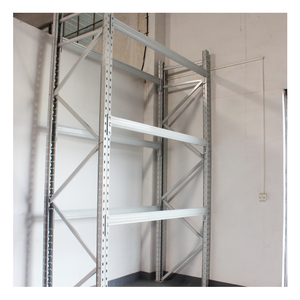
Heavy Duty Boltless Shelf Rack Adjustable Metal For Warehouse Storage Steel Low Price
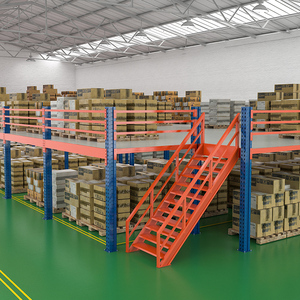
Supper Quality 232Factory Price Q235 Customized Adjustable Leveling Feet Warehouse Pallet Racking Easy to Install Made in Turkey
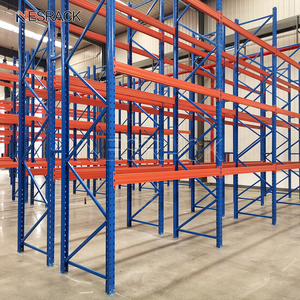
Custom Heavy Duty Industrial Steel Selective Pallet Rack Adjustable Warehouse Storage Rack Shelves
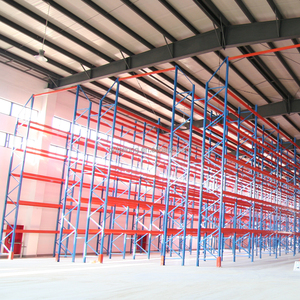
Warehouse Pallet Racking Heavy-Duty Metal Beam Adjustable Selective 5-Layer Shelving Systems CE Certified Customizable Plug-In
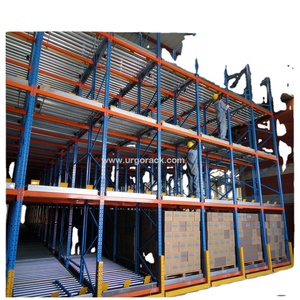
High Efficiency Order Picking Racking System, Gravity Flow Roller Racking System
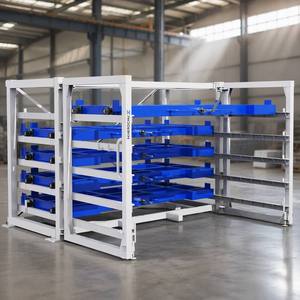
Heavy Duty Industrial Roll-out Sheet Metal Storage Rack, 6-Tier Space-Saving Steel Plate Drawer System for Fabrication Workshop
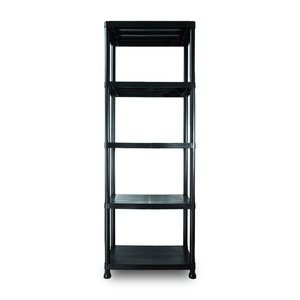
24 In. X 12 In. X 53 In. Solid Light-Duty 4 Tier - Warehouse Shelf Storage Shelving Rack Unit
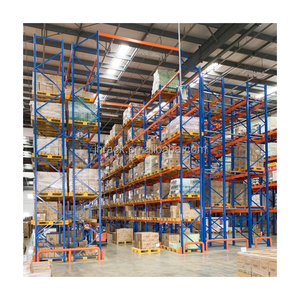
Non-Standard Customized Heavy Duty Metal Shelf Wire Racks Storages Warehouse Pallet Shelving System Push Back Rack for Sale
Engineering Principles of CE Certified Drive-Through Racking Systems
An in-depth structural evaluation of high-density First-In-First-Out (FIFO) continuous lane design, cold-formed profile behavior, and seismic safety requirements under European EN 15512 specifications.
Continuous Lane FIFO Logistics
Unlike Drive-In systems that feature a closed rear stop (LIFO rotation), Drive-Through configurations provide separate loading and unloading access faces. Material handlers feed pallets at the charge side and retrieve them at the opposite discharge side, enforcing strict inventory date rotation essential for FMCG, cold storage, and pharmaceuticals.
EN 15512 & CE Structural Rigor
Because Drive-Through racks omit traditional vertical cross-bracing within the operating tunnels, lateral stability is achieved via overhead structural portal ties, horizontal top bracing, and reinforced cantilever support brackets. All uprights and arms undergo limit-state verification per EN 15512:2020 to guarantee resistance against forklift impact and seismic shear forces.
High-Yield Q235B / Q355B Steel
Columns are roll-formed from cold-rolled structural sheet steel with an omega-profile cross section and multiple stiffening ribs. Standard load beams and one-piece continuous pallet support rails are calibrated with specific safety factors to limit operational rail deflection to below 1/200th of the span, preventing pallet tipping or rail dislodgement.
Kinematics of Drive-Through Warehouse Layouts
In high-density warehouse racking systems, spatial efficiency is directly correlated with aisle elimination. Standard selective pallet racking dedicates roughly 60% of total footprint area to forklift operating corridors. Drive-Through racking compresses this footprint by enabling counterbalanced or reach trucks to enter the storage matrix directly, achieving up to 80% floor footprint utilization.
The core structural challenge of a Drive-Through system is that upright frames cannot be braced in the cross-aisle direction below the topmost pallet level. The system relies mechanically on the rigid connection between the continuous pallet rails, the structural cantilever arms, and the front/rear portal bracing trusses overhead. Guangzhou Heda Shelves utilizes non-linear FEA (Finite Element Analysis) software to simulate full-depth dynamic forklift entry, localized impact stresses on floor anchors, and differential building settlement to ensure total frame plumbness under maximum rated loads.
| Storage System Type | Space Utilization | Pallet Accessibility | Stock Rotation Strategy | Capital Cost per Pallet | Seismic & Impact Risk |
|---|---|---|---|---|---|
| Drive-Through Racking | 75% – 85% | Lane-Dependent | True FIFO | Moderate ($$) | Controlled via Floor Guides & Overhead Bracing |
| Drive-In Racking | 70% – 80% | Lane-Dependent | LIFO Only | Economical ($) | Rear X-Braced Structure |
| Radio Shuttle Cart Racking | 85% – 90% | Automated Lane-End | FIFO or LIFO | High ($$$) | Low (Forklifts remain outside tunnels) |
| Pallet Flow (Gravity Roller) | 80% – 88% | Pick-Face Dedicated | True FIFO | High ($$$) | Self-Contained Roller Inclines |
| Selective Pallet Racking | 35% – 45% | 100% Immediate Access | Any Rotation Model | Baseline ($) | Minimal (Wide operational aisles) |
Guangzhou Heda Shelves Co., Ltd.: Integrated Exporter Since 2001
Operating a massive 30,000 square meter (323,000 sq ft) heavy manufacturing complex, supplying verified high-density logistics solutions to global third-party logistics (3PL) providers, food distributors, and industrial manufacturers.
Rapid 24-Hr Engineering CAD
Supply your building dimensions, clear roof heights, slab load capacities, and forklift models. Heda's structural engineering division returns detailed DWG layouts, imperial/metric load capacity tables, and 3D architectural renders within 24 hours.
Full In-House Manufacturing
From automated steel slitting, high-speed CNC punching, and 24-pass precision roll-forming to robotic welding, pickling, phosphating, and electrostatic powder curing lines: zero third-party subcontracting ensures total batch uniformity.
Export Container Optimization
With monthly output surpassing 30,000 metric tons, components are packaged using custom steel chocks, corner buffers, and ocean-proof polymer bundling to guarantee zero transit warping and rapid un-stuffing at North American and European ports.
Certified Code Compliance
Full adherence to CE marking guidelines (EN 15512, EN 15620, EN 15629, EN 15635), ISO 9001:2015 Quality Management Systems, and RMI (Rack Manufacturers Institute) specification standards for the United States and Canada.
Drive-Through Racking: Sourcing & Procurement Trends (2025–2030)
Strategic analysis of industrial warehouse automation, cryogenic cold-storage expansion, seismic building codes, and total cost of ownership (TCO) benchmarks.
1. Synergistic AMR & Automated Guided Forklift Integration
The modern logistics distribution center is moving rapidly from manual counterbalance forklifts to vision-guided Autonomous Mobile Robots (AMRs) and automated high-reach trucks. While standard Drive-In setups present navigation hurdles due to blind dead-ends, Drive-Through racking enables linear unidirectional vehicular flow.
Procurement directors are specifying high-precision floor guide rails (either heavy-duty structural angle steel or magnetic floor inductive tracks) and increased tunnel entry clearances to accommodate LiDAR navigation tolerances without risk of upright impact.
2. Total Cost of Ownership (TCO) Over Nominal Purchase Price
Global procurement teams are shifting away from evaluating racking suppliers purely on landed metric ton steel price. Focus has shifted toward Total Cost of Ownership, which encompasses installation labor, structural longevity, and repair downtime.
Factory-direct exporters that supply pre-assembled upright trusses, boltless drop-in support arm locks, and powder coatings with superior salt-spray corrosion resistance reduce overall commissioning schedules by up to 35%, yielding rapid operational deployment.
3. Cryogenic Steel Formulations for Cold-Chain Expansion
With global frozen food delivery and temperature-controlled biological pharmaceuticals expanding, drive-through racks are frequently installed inside blast freezers maintained at -25°C to -35°C. Conventional carbon steel risks ductile-to-brittle transition at cryogenic temperatures, leading to sudden structural failure under dynamic forklift impact.
Procurement requirements now demand fine-grained Q355D or Q355E structural grades with certified Charpy V-notch impact toughness tested down to -40°C, paired with low-temperature electrostatic thermosetting powder formulations that resist micro-cracking.
4. Stringent Seismic Zone Compliance & Stamped Calculations
Municipal building authorities across seismic zones (such as the US West Coast, New Zealand, Japan, and Southern Europe) enforce rigorous anchoring standards. Warehouse operators can no longer import generic shelving without engineer-stamped documentation.
Leading exporters provide third-party validated calculations detailing dynamic response spectra, baseplate anchor bolt shear values (ICC-ES approved mechanical or chemical anchors), and localized column buckling resistance tailored to regional seismic site classes.
Frequently Asked Questions on CE Certified Drive-Through Racks
Direct technical answers to common questions raised by facility directors, logistics engineers, and international procurement specialists.
What is the definitive mechanical difference between Drive-In and Drive-Through Racking?
How does CE Certification (EN 15512:2020) protect the buyer in international procurement?
Can Heda Shelves provide load calculations and layouts in Imperial units (lbs, inches, feet)?
What floor guide systems and impact protection accessories are recommended?
What pallet types are compatible with Drive-Through racking systems?
How are ocean shipping containers loaded to prevent damage during long-distance transit?
What is the standard production lead time and quotation turnaround for large projects?
Request Your Custom Drive-Through Racking Layout & Seismic Calculation
Send our senior engineering team your warehouse DWG drawings, pallet dimensions, forklift lift models, and operational storage objectives. Receive an optimized CAD floor layout, structural capacity report, and factory-direct export quotation within 24 hours.