Choosing a China top Pallet Storage Racking System manufacturer requires more than comparing prices or browsing polished product catalogs. The phrase “top manufacturer” sounds simple, but it hides important questions about engineering, production control, safety, and after-sales support.
Edward Frazelle, a respected warehouse logistics expert, described the warehouse as “the heart of the supply chain.” His observation explains why racking decisions deserve careful attention. A pallet rack is not merely a steel frame. It supports inventory, forklift movement, worker safety, and daily operating speed. One incorrect beam capacity can create serious operational problems.
Reliable Chinese manufacturers usually provide more than standard rack profiles. They should review pallet dimensions, load weights, aisle widths, forklift types, ceiling height, and expansion plans. A strong supplier can show material specifications, welding procedures, coating details, inspection records, and installation guidance. Those details matter when racks stand several meters high beside active forklift lanes.
The best choice is not always the largest factory. It is the manufacturer that understands your warehouse conditions and documents its recommendations clearly. Ask for drawings. Request load calculations. Check references from comparable facilities.
Still, supplier claims require independent thinking. Certifications can support confidence, but they do not replace technical verification. A low quotation may also exclude anchoring, delivery, installation, or future adjustments. That is easy to miss.
This guide examines how to evaluate China-based Pallet Storage Racking System manufacturers through practical evidence, engineering competence, manufacturing experience, and service reliability. It also recognizes an uncomfortable truth: even a well-designed system can underperform when warehouse data is incomplete or operations change.
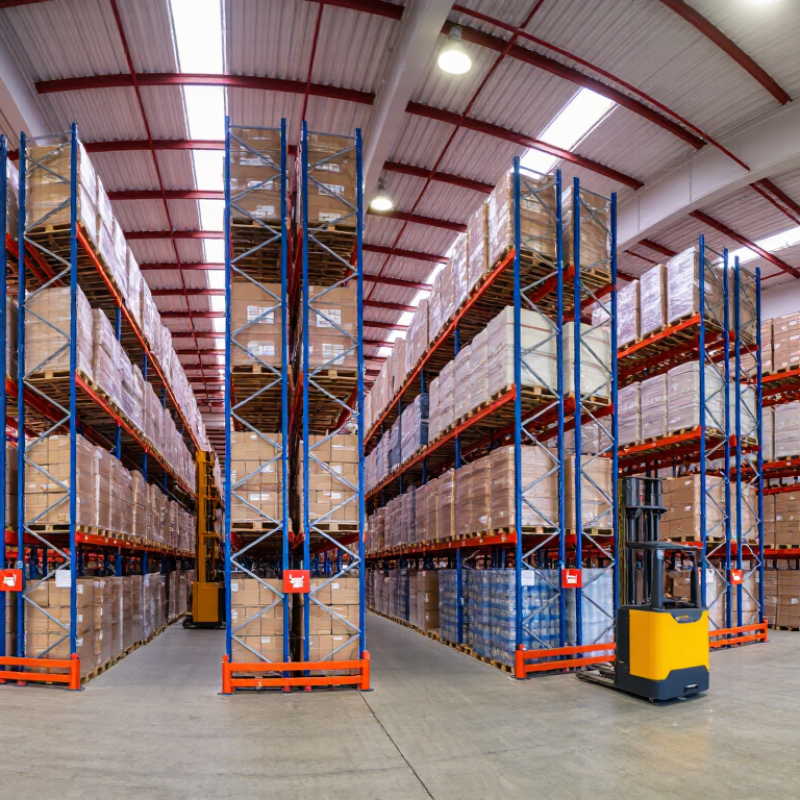
A pallet storage racking system is a steel structure designed to store goods on pallets at multiple vertical levels. Upright frames carry the weight, while horizontal beams support each pallet position. Forklifts place and retrieve loads from the front aisle. The system turns unused ceiling height into organized storage space.
Selective pallet racking is common because every pallet remains accessible. Drive-in designs provide higher density but reduce direct access and require stricter loading discipline. The right choice depends on pallet dimensions, turnover rate, forklift reach, aisle width, and floor capacity. According to the 2023 MHI Annual Industry Report, 74% of supply chain professionals planned to adopt robotics and automation within five years. That trend makes rack layout and forklift compatibility more important.
A practical design begins with measured loads, not estimates. Engineers should verify beam deflection, upright protection, anchoring, slab strength, and sprinkler clearance. The Rack Manufacturers Institute publishes design and safety guidance widely used in North America. Routine inspections should check bent frames, loose anchors, damaged beams, and missing safety pins. Small damage can become expensive.
Not every dense system performs better.
A warehouse storing fast-moving cartons may lose productivity when operators travel through narrow aisles. I have seen layouts look efficient on paper but create awkward turning movements beside end frames. Safety labels, impact barriers, and clear load limits deserve equal attention. Storage density matters, but reliable daily access matters more.
How Are Pallet Racking Systems Designed and Classified?
Pallet racking design begins with the stored goods, not the rack frame. Engineers record pallet length, width, height, weight, and loading frequency. They also measure ceiling height, floor condition, forklift turning space, and required aisle width. Aisles matter. Poor measurements can reduce capacity and create daily handling problems.
Systems are commonly classified by access method, storage density, and operating style. Selective racking gives direct access to every pallet and suits varied inventories. Drive-in racking increases density by reducing aisles, but it offers less stock rotation flexibility. Double-deep systems improve density while keeping some direct access. Pallet flow designs support first-in, first-out movement through rollers and controlled loading positions. Automated systems use shuttles, conveyors, or stacker cranes where volume and accuracy justify greater complexity.
A reliable design includes beam levels, upright spacing, load ratings, pallet overhang, and impact protection. Engineers should verify every connection against the actual working load, not an estimated average. On-site experience shows that damaged pallets and uneven floors often change the original plan. That detail is easy to overlook. Regular inspections should check bent frames, loose anchors, missing safety pins, and overloaded beams. Classification is useful, but it is not absolute; a warehouse may combine selective and high-density zones for different products. The best layout may still need revision after workers test it during real shifts.
| Racking System | Primary Storage Principle | Typical Pallet Access | Typical Selectivity | Typical Storage Density | Common Applications | Key Design Requirements | Important Limitations |
|---|---|---|---|---|---|---|---|
| Classification by Storage and Access Method | |||||||
| Selective Pallet Racking | Each pallet is stored in an individual beam-level position. | Direct forklift access to every pallet position. | Very high; normally close to 100% direct access. | Medium; aisle space reduces cube utilization. | Warehouses with many stock-keeping units, mixed products, and frequent picking. | Beam capacity, upright-frame capacity, pallet dimensions, forklift turning radius, aisle width, building height, and floor load capacity. | Lower storage density than compact systems because dedicated aisles are required. |
| Double-Deep Pallet Racking | Two pallet rows are placed one behind the other. | Direct access to the front pallet; rear pallet access requires moving the front pallet. | Medium; typically about 50% direct access. | Higher than selective racking. | Operations storing fewer stock-keeping units with several pallets per item. | Reach-truck compatibility, double-deep beams or supports, load center, pallet stability, and inventory rotation. | Requires compatible lifting equipment and can reduce first-in-first-out efficiency. |
| Drive-In Racking | Pallets are stored on rails inside deep lanes, usually with one entry side. | Forklift enters the storage lane to place or retrieve pallets. | Low; access is usually limited by lane sequence. | High; shared aisles and deep lanes reduce unused space. | Large quantities of similar products, cold storage, and low-SKU inventory. | Rail capacity, forklift dimensions, entry clearance, impact protection, lane depth, and load sequencing. | Limited selectivity and less suitable for strict first-in-first-out inventory control. |
| Drive-Through Racking | Pallets are stored in lanes accessible from both ends. | Forklifts can load from one side and unload from the opposite side. | Low to medium; better suited to first-in-first-out flow than drive-in storage. | High. | High-volume products requiring loading and unloading from separate sides. | Two-sided aisle planning, rail alignment, forklift clearance, product flow, and lane loading rules. | Needs sufficient building depth and careful traffic separation. |
| Pallet Flow Racking | Pallets move by gravity along inclined rollers from the loading side to the unloading side. | Load from one side and retrieve from the opposite side. | Medium to high for first-in-first-out operation. | High. | Perishable goods, date-sensitive products, and high-throughput distribution. | Roller pitch, pallet quality, lane slope, braking devices, load compatibility, and end-stop protection. | Higher equipment cost and stricter pallet-quality requirements. |
| Push-Back Racking | Pallets are stored on nested carts or inclined rails and pushed backward by subsequent pallets. | Forklift access is generally from one aisle. | Medium; last-in-first-out operation is common. | High. | Multiple pallets per stock-keeping unit where compact storage is important. | Cart or rail capacity, lane depth, pallet uniformity, forklift operating clearance, and braking control. | Usually unsuitable where strict first-in-first-out rotation is mandatory. |
| Mobile Pallet Racking | Rack rows are mounted on powered or mechanically driven mobile bases that open an access aisle when needed. | One or a limited number of aisles can provide access to many rows. | High, although access is sequential rather than simultaneous. | Very high; fixed aisles between every row are reduced. | Cold rooms, high-value inventory, and facilities with limited floor area. | Rail foundation, base load, drive controls, safety scanners, emergency stops, and floor flatness. | Higher capital cost and slower access when multiple rows must be opened. |
| Automated Pallet Racking | Storage and retrieval are performed by automated cranes, shuttles, or guided vehicles. | Automated equipment retrieves pallets according to warehouse-control instructions. | High, subject to system configuration and software logic. | Very high; vertical height and narrow aisles can be optimized. | High-throughput distribution centers, controlled environments, and labor-intensive operations. | System throughput, equipment travel speed, rack tolerances, fire protection, controls integration, and power redundancy. | Greater design complexity and dependence on controls, maintenance, and system availability. |
| Classification by Structural Design and Loading | |||||||
| Adjustable Beam Pallet Racking | Horizontal beams are connected to upright frames at adjustable vertical levels. | Usually served by counterbalance, reach, or turret forklifts. | High when configured as selective racking. | Medium to high, depending on aisle layout and number of levels. | General warehouses, manufacturing storage, retail distribution, and spare-parts logistics. | Beam load, upright load, connection strength, bracing, pallet overhang, seismic conditions, and protection systems. | All components must be checked as a complete structural system; capacities are not interchangeable between designs. |
| Multi-Tier Pallet and Picking Racking | Several usable levels are created within a tall rack structure, often with supported walkways or platforms. | Manual access, order-picking equipment, or dedicated lifting equipment. | High for manually managed stock locations. | High vertical utilization. | Small-item picking, e-commerce fulfillment, archive storage, and mixed pallet-and-carton operations. | Platform load, guardrails, stairs, gates, access control, fire protection, and allowable floor loading. | Requires careful separation of pedestrian and forklift traffic. |
| Very Narrow Aisle Racking | High-density selective rack layout with narrow operating aisles. | Specialized turret or guided forklifts. | High. | High; more rack positions fit within the same building footprint. | High-bay warehouses with standardized pallets and high inventory variety. | Guidance systems, aisle straightness, floor flatness, forklift mast height, wire or rail guidance, and end-of-aisle protection. | Requires specialized equipment and precise installation tolerances. |
| Core Design Data for Pallet Racking Projects | |||||||
| Pallet and Unit Load | Defines the load footprint, total height, weight, and stability requirements. | Common pallet footprints include approximately 1,200 × 800 mm and 1,200 × 1,000 mm, but local formats vary. | Must include pallet deformation, load overhang, packaging tolerance, and center-of-gravity position. | Every rack level should be designed for the actual pallet and unit-load characteristics. | Do not use nominal pallet size as the only design input. | ||
| Rack Height and Number of Levels | Determined by clear building height, fire-protection requirements, equipment reach, and required storage capacity. | Level spacing is calculated from pallet height, beam depth, handling clearance, and required vertical tolerances. | Higher racks increase capacity but also increase structural, installation, and safety requirements. | Building columns, sprinklers, lighting, roof structure, and emergency access must be coordinated. | Actual height must be verified against local building and fire regulations. | ||
| Aisle Width | Selected according to forklift type, load size, turning behavior, and operating method. | Conventional forklift aisles are generally wider than reach-truck or turret-truck aisles. | There is no universal aisle width; the equipment manufacturer's turning and operating data should be used. | Traffic flow, pedestrian routes, emergency exits, and end-of-aisle clearances affect the final layout. | Reducing aisle width without changing equipment can create unsafe operating conditions. | ||
| Load Capacity | Includes pallet load, beam capacity, upright-frame capacity, connection capacity, and floor capacity. | Capacity must be stated for a defined beam span, number of levels, load distribution, and rack configuration. | Capacity labels should be visible and consistent with the approved design. | Uneven loading, impact, missing components, and unauthorized beam relocation can reduce capacity. | Published capacity values are project-specific and should not be treated as universal ratings. | ||
| Safety and Compliance | Addresses structural design, inspection, damage control, safe operation, and maintenance. | Common reference frameworks include EN 15512, EN 15620, EN 15629, EN 15635, RMI specifications, and applicable local regulations. | Seismic design, fire protection, rack guards, row spacers, backstops, mesh panels, and signage may be required. | Regular inspections should identify damaged uprights, beams, bracing, anchors, protectors, and missing safety components. | The applicable standard depends on the installation location and project requirements. | ||
China has become a leading pallet racking manufacturer because it combines engineering depth, large-scale production, and responsive customization. Manufacturers can produce selective racks, drive-in systems, and heavy-duty beams for different warehouse layouts. Many factories use automated roll forming, robotic welding, and powder coating lines. These processes improve consistency, but quality still depends on inspection discipline.
Practical warehouse projects show why technical support matters. Engineers review pallet weight, forklift clearance, floor strength, and earthquake conditions before confirming a design. Load labels and structural calculations help operators use the system safely. Reliable manufacturers also test steel thickness, weld strength, coating adhesion, and beam deflection. However, low prices can hide weaker materials or incomplete documentation. That advantage is not automatic. Buyers should verify test records, production controls, and installation guidance before ordering.
Tips: Request a clear load table and material specification. Check whether drawings match the delivered components. Ask for sample weld inspections and coating results. Measure aisle width on site, not only on a digital plan. Small errors become expensive during installation. A useful supplier should explain limitations honestly, including cases where a proposed rack design needs revision.
Choosing China’s top pallet racking manufacturer requires more than comparing prices. Begin with verified manufacturing experience, not attractive catalog images. Visit the factory remotely or in person, and inspect welding areas, coating lines, storage conditions, and quality records. Ask for load calculations based on your pallet weight, beam length, rack height, and operating equipment.
A reliable supplier should provide clear drawings, material specifications, inspection reports, and installation guidance. Check whether engineers review your warehouse layout before quoting. Request references from projects with similar loads and working conditions. Examine how the manufacturer manages steel traceability, dimensional checks, surface treatment, and packaging. Small details matter. Bent frames or poorly protected edges can create expensive delays.
Tips: Ask for a sample connection and a production video. Confirm testing methods and allowable tolerances in writing. Compare warranty coverage, spare-part access, and response times. Do not trust the lowest quotation automatically. It may exclude anchors, protectors, delivery, or installation support. I have seen buyers focus heavily on unit cost and overlook aisle clearance. That mistake can reduce storage capacity and slow daily operations. A careful evaluation should include technical evidence, communication quality, and the supplier’s willingness to admit limitations. No manufacturer is perfect. Their response to problems reveals more than polished sales material.
Choosing a Chinese pallet racking manufacturer requires more than comparing quotations. MHI’s 2024 Annual Industry Report found that 55% of supply chain leaders planned to increase technology investment. That pressure makes storage density important, but safety and adaptability still matter. Ask for load calculations, steel grades, welding procedures, and inspection records. A polished catalog proves little.
Request drawings showing beam spans, upright profiles, anchor positions, and forklift clearances. Compare these details with your warehouse’s slab strength, ceiling height, pallet dimensions, and seismic conditions. The manufacturer should explain testing methods and provide traceable material certificates. ISO 9001 certification can support process control, but it does not guarantee suitable rack engineering. That distinction is often missed.
Use a sample bay or pilot installation before ordering thousands of positions. Check powder coating, hole alignment, beam connectors, and installation tolerances. Interact Analysis has reported continuing automation growth in warehouses, yet automated systems demand tighter rack accuracy. Ask how the supplier manages dimensional variation. It may sound minor, but poor alignment can disrupt shuttle or conveyor movement. Include independent pre-shipment inspection and clear acceptance criteria. I would not rely on the lowest offer alone; some savings disappear through redesign, delayed parts, or difficult after-sales support. Request references from facilities with similar loads and operating temperatures. Verify response times in writing.
Record pallet length, width, height, weight, and loading frequency. Measure ceiling height, floor condition, forklift space, and aisle width.
They are classified by access method, storage density, and operating style. Common types include selective, drive-in, double-deep, flow, and automated systems.
Selective racking provides direct access to every pallet. It suits warehouses storing varied products with frequent picking activity.
Drive-in racking reduces aisle space and stores pallets deeper. However, it offers less flexibility for stock rotation and access.
Verify beam levels, upright spacing, load ratings, pallet overhang, and impact protection. Check every connection against the actual working load.
Damaged pallets, uneven floors, and real forklift movements may change the original plan. The layout may need revision.
Request load calculations, drawings, material specifications, inspection reports, and installation guidance. Review manufacturing areas, coating processes, packaging, and quality records.
A low quotation may exclude anchors, protectors, delivery, or installation support. Later redesigns and delayed parts can remove the apparent savings.
Compare beam spans, upright profiles, anchor positions, forklift clearances, and allowable tolerances. Check them against slab strength, ceiling height, and pallet sizes.
No. They require accurate racks, suitable equipment, and strong operating justification. Poor alignment can interrupt shuttle or conveyor movement.
A Pallet Storage Racking System is a structured warehouse solution designed to store palletized goods safely, maximize vertical space, and support efficient loading and retrieval. These systems can be designed according to warehouse size, product characteristics, access frequency, and handling equipment. Common classifications include selective pallet racking, drive-in racking, double-deep racking, and automated or high-density solutions, each offering different benefits in accessibility, storage capacity, and operational efficiency.
China has become a leading pallet racking manufacturing center because of its mature industrial supply chain, broad production capacity, engineering expertise, and competitive manufacturing costs. When evaluating Chinese manufacturers, buyers should review material quality, load-bearing performance, design capabilities, production standards, testing procedures, installation support, and after-sales service. The right manufacturer should provide customized layouts, clear technical documentation, reliable communication, and solutions that match the warehouse’s safety requirements, budget, and future expansion plans.