Choosing Pallet Storage Racks is not simply a matter of selecting the tallest frame or the lowest quoted price. A warehouse may look spacious on paper, yet a poorly planned rack layout can create blocked aisles, wasted cube, and unsafe loading points. The right decision connects pallet dimensions, forklift reach, inventory turnover, building height, floor capacity, and future growth. It also reflects daily experience: operators need clear sightlines, stable loads, and enough turning space around every bay.
Industry evidence supports a careful approach. MHI’s 2024 Annual Industry Report identifies supply chain innovation as a competitive advantage for many organizations, while also showing that companies continue increasing investment in technology and operational improvements. Storage infrastructure belongs in that conversation. A rack system affects picking speed, labor movement, inventory accuracy, and expansion costs. However, automation cannot correct a weak storage design. That assumption deserves scrutiny.
Safety must guide every specification. OSHA 29 CFR 1910.176 requires stored materials to remain stable and secure, with storage practices that do not create hazards. The Rack Manufacturers Institute’s ANSI MH16.1 standard also provides engineering guidance for industrial steel storage racks. These references do not replace a site assessment. They support it.
This guide explains how to compare Pallet Storage Racks with practical judgment. It considers selective, drive-in, push-back, and pallet-flow designs. It also examines load ratings, seismic conditions, aisle widths, protection accessories, and maintenance routines. A rack that fits today may fail tomorrow. Better planning leaves room for changing products, heavier pallets, and honest operational surprises.
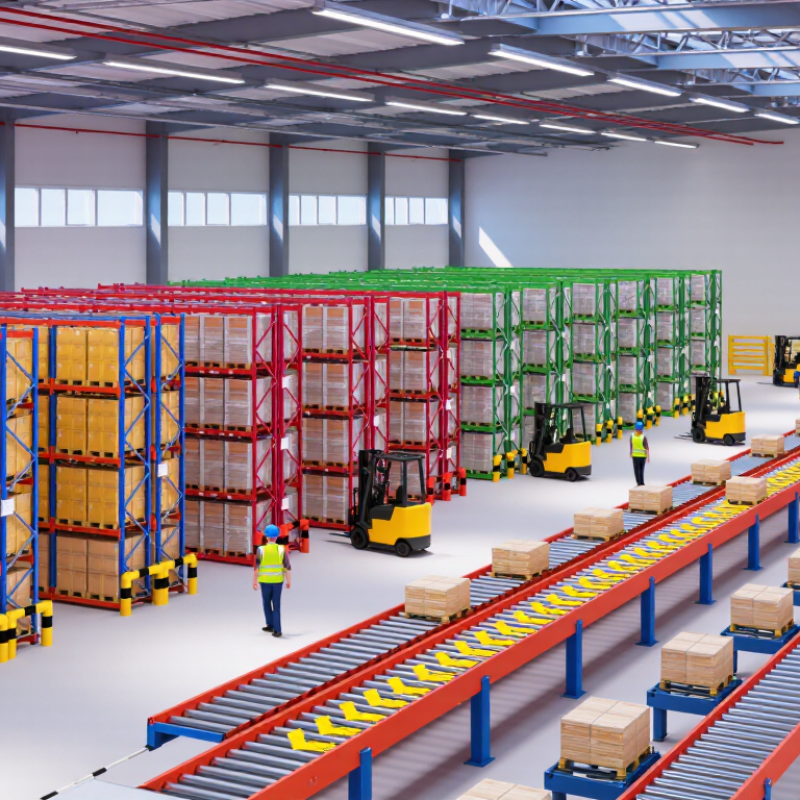
Define Your Warehouse Storage Requirements
Choosing pallet storage racks begins with a clear picture of daily warehouse work. Measure usable floor space, ceiling height, aisle width, and door locations before comparing rack designs. Record pallet length, width, height, and weight, including the heaviest seasonal load. One overlooked pallet can change the whole calculation. Note how often forklifts enter each aisle and whether workers need direct access to every pallet. Fast-moving goods may need lower, more accessible positions. Slow-moving stock can use higher levels.
Your storage requirements should reflect inventory rotation, product compatibility, and future growth. A rack that fits today may feel restrictive after six months. Review current pallet counts, peak-season volumes, and the number of stock-keeping units. Separate goods by turnover and handling method, rather than filling every available gap. Leave practical clearance for forklift movement, load placement, lighting, and fire protection systems. Do not estimate from empty pallets alone; loaded pallets behave differently. That mistake is common.
Create a simple rack map using measured dimensions and actual workflow observations. Ask operators where congestion forms, where pallets wait, and which locations cause repeated bending or reaching. Their experience often reveals problems that drawings miss. I once underestimated seasonal inventory and left too little staging space. The layout looked efficient, but daily movement became awkward. Confirm floor capacity, rack load ratings, protection needs, and inspection routines with qualified professionals. Keep written assumptions, especially for future stock growth.
Compare Pallet Rack Types and Configurations
How to Choose Pallet Storage Racks for Your Warehouse?
Comparing rack types starts with product movement, not available floor space. Selective pallet racks offer direct access to every pallet. They suit mixed stock and frequent picking, but consume more aisles. Drive-in racks increase density by allowing forklifts to enter storage lanes. However, they provide less selectivity and require consistent pallet dimensions. Double-deep racks improve cube use, yet they need reach trucks and disciplined stock rotation. Push-back racks support several pallets per lane, while pallet flow racks favor first-in, first-out handling.
Configuration matters as much as rack type. Measure pallet weight, height, beam span, aisle width, forklift turning radius, and clear ceiling height. MHI’s 2024 Annual Industry Report found that 55% of supply-chain professionals planned to increase technology and innovation investment. That supports using warehouse data before redesigning storage. Still, software cannot correct weak measurements. I have seen layouts look efficient on paper, then lose capacity because sprinkler clearance and damaged pallets were ignored.
Tips:
Map daily pallet movements for two weeks. Mark slow, medium, and fast movers. Place fast movers near dispatch. Keep heavier loads on lower levels. Confirm every rack’s rated capacity with a qualified engineer. Inspect uprights, beams, anchors, and guards regularly. OSHA’s material-handling guidance requires stable storage and safe clearance, but practical judgment remains essential. Aisles that seem adequate may become unsafe during peak traffic. Test one rack configuration before expanding it across the warehouse.
Evaluate Rack Capacity, Dimensions, and Load Safety
Choosing pallet storage racks begins with capacity, not appearance. A reliable assessment records pallet weight, size, stack height, beam levels, and forklift impact risk. Never treat a supplier’s maximum rating as your working capacity. A 1,000-kilogram pallet may require 2,400 kilograms per beam pair, depending on pallet positions and load distribution. Numbers matter.
Measure the actual pallet, including overhang. Then check aisle width, rack height, slab strength, and sprinkler clearance. A rack designed for 1,200-millimeter pallets may fail operationally when pallets lean or project into traffic lanes. ANSI MH16.1 covers steel storage rack design requirements, while OSHA requires employers to follow safe material-storage practices and maintain clear aisles. I would also verify frame loads, beam deflection, anchor details, and local seismic conditions. A spreadsheet can be wrong.
Load safety deserves daily attention. OSHA’s Powered Industrial Trucks eTool reports approximately 85 annual fatalities and 34,900 serious injuries linked to forklift incidents in the United States. Rack protection therefore needs more than end guards. Use trained operators, visible capacity plaques, impact inspections, and documented repairs. RMI guidance recommends regular rack inspections by a competent person. In practice, I would photograph bent uprights and quarantine damaged bays immediately. The difficult part is consistency. A rushed inspection can miss a small weld crack, a displaced anchor, or a pallet resting unevenly. Recheck the design after changing pallet weight, rack height, or handling equipment.
How to Choose Pallet Storage Racks for Your Warehouse? - Evaluate Rack Capacity, Dimensions, and Load Safety
| Rack Configuration |
Typical Use |
Recommended Bay Width |
Recommended Frame Height |
Typical Pallet Positions per Bay |
Typical Load per Level |
Typical Bay Capacity |
Minimum Aisle Width |
Load Safety Considerations |
Space Utilization |
| Selective Pallet Rack |
High SKU variety and direct access to every pallet |
2,700–3,300 mm |
3,000–10,000 mm |
2–3 pallets per level |
1,000–3,000 kg |
4,000–18,000 kg |
3,000–3,600 mm |
High when beams, frames, anchors, and guards are correctly rated |
Moderate |
| Double-Deep Rack |
Higher storage density with moderate SKU turnover |
2,700–3,300 mm |
4,500–10,000 mm |
4–6 pallets per level |
1,000–2,500 kg |
8,000–30,000 kg |
3,600–4,200 mm |
Requires reach-truck compatibility and controlled loading depth |
Good |
| Drive-In Rack |
Large quantities of similar products with low SKU variety |
1,350–1,500 mm per pallet lane |
3,000–9,000 mm |
4–10 pallets per lane |
800–1,500 kg |
10,000–60,000 kg |
3,500–4,500 mm |
Requires strict forklift control, rail protection, and load-position checks |
Very good |
| Push-Back Rack |
Last-in, first-out storage for multiple pallets per SKU |
2,700–3,300 mm |
3,000–9,000 mm |
2–6 pallets per lane |
800–1,500 kg |
6,000–36,000 kg |
3,500–4,200 mm |
Requires correctly calibrated carts, lane stops, and pallet condition control |
Very good |
| Pallet Flow Rack |
First-in, first-out inventory such as food, beverages, and dated goods |
2,700–3,300 mm |
3,000–9,000 mm |
2–8 pallets per lane |
800–1,500 kg |
6,000–48,000 kg |
3,000–4,000 mm |
Requires roller capacity checks, speed controllers, brakes, and lane separators |
Very good |
| Narrow-Aisle Rack |
High-density storage where floor area is limited |
2,700–3,300 mm |
6,000–14,000 mm |
2–3 pallets per level |
1,000–2,500 kg |
8,000–30,000 kg |
1,800–2,500 mm |
Requires guided trucks, aisle protection, floor flatness, and operator training |
Excellent |
| Mobile Pallet Rack |
Maximum floor utilization with access to selected rack aisles |
2,700–3,300 mm |
3,000–10,000 mm |
2–3 pallets per level |
1,000–2,500 kg |
8,000–30,000 kg |
3,000–4,000 mm when open |
Requires interlocks, anti-crush sensors, emergency stops, and floor verification |
Excellent |
| Pallet Shuttle Rack |
High-density storage with automated pallet movement |
1,350–1,500 mm per pallet lane |
4,500–12,000 mm |
4–20 pallets per lane |
800–1,500 kg |
12,000–120,000 kg |
3,500–4,500 mm |
Requires shuttle controls, presence sensors, end stops, and battery management procedures |
Excellent |
Plan Warehouse Layout, Access, and Handling Equipment
Choosing pallet storage racks begins with the warehouse layout, not the rack itself. Measure clear height, column positions, floor condition, doors, and emergency routes. Leave enough space for safe movement around every rack row. A dense layout may increase capacity, but it can slow picking and create dangerous congestion.
Access requirements should guide aisle planning. Counterbalanced forklifts need wider turning space than reach trucks or guided equipment. Confirm the equipment’s turning radius with its technical documentation. Keep pedestrian paths separate where possible. Mark crossings clearly, and protect rack ends from vehicle impact. The first layout is rarely perfect. A simple cardboard or digital floor plan can reveal blocked doors and awkward travel paths before installation.
Handling equipment also affects beam levels and load selection. Check pallet dimensions, load weight, load stability, and lifting height. Heavier pallets may require lower storage positions for easier handling. Uneven floors can complicate alignment and increase equipment wear. Ask a qualified rack engineer to verify structural capacity, anchoring, and local safety requirements. Schedule routine inspections, especially after impacts or layout changes. Small adjustments matter. A rack system should support real work patterns, not only the maximum storage count.
Check Compliance, Durability, and Long-Term Costs
How to Choose Pallet Storage Racks for Your Warehouse?
Check Compliance, Durability, and Long-Term Costs
A rack may look strong, yet its real capacity depends on beam levels, pallet weight, and load placement. Check the supplier’s load data and compare it with your daily operations. Each bay should display a clear capacity label. Local building, fire, and workplace requirements also matter. Ask a qualified engineer to review unusual layouts, seismic risks, or heavy loads.
Durability starts with steel thickness, protective coatings, and stable connections. Inspect upright frames, beam locks, anchors, and floor conditions before installation. Forklift contact is common, so guard vulnerable corners and keep travel lanes visible. A small dent can become a serious weakness. Schedule inspections after impacts, relocations, and major layout changes.
Purchase price tells only part of the story. Include installation, floor repairs, safety accessories, inspections, replacements, and future expansion. A cheaper rack may require more maintenance or limit pallet sizes later. Measure your current inventory carefully. I have seen warehouses buy extra-deep bays, then lose usable aisle space. That choice looked efficient on paper. It was not. Leave room for safe handling, changing stock, and honest human error.
FAQS
Record pallet weight, dimensions, overhang, stack height, and planned beam levels. A 1,000-kilogram pallet may need 2,400 kilograms per beam pair. Load distribution changes the calculation. Measure the real pallet, not an ideal drawing.
Measure clear height, aisle width, doors, columns, floor condition, and sprinkler clearance. Check whether pallets project into traffic lanes. A small overhang can obstruct forklift movement. A cardboard layout may reveal blocked doors.
Aisle width depends on the forklift type and its turning radius. Counterbalanced forklifts usually need more turning space than reach equipment. Check the equipment documentation before fixing aisle dimensions. Do not guess.
Pallet weight, position, beam span, frame loads, and load distribution all affect capacity. Review beam deflection, anchors, slab strength, and local seismic conditions. Never use the supplier’s maximum rating as your working capacity. Numbers matter.
Train operators, separate pedestrian paths, mark crossings, and protect exposed rack ends. Keep aisles clear and inspect damage after every noticeable impact. Photograph bent uprights and isolate damaged bays immediately. Do not delay repairs.
Inspect racks routinely, especially after impacts, layout changes, or heavier loads. Look for bent uprights, displaced anchors, uneven pallets, and small weld cracks. A competent person should complete formal inspections. Rushed checks miss details.
Lower storage positions often make heavier pallets easier and safer to handle. Confirm the rack design before changing load locations. Uneven floors can worsen alignment and equipment wear. Check twice.
Recheck the design after changing pallet weight, rack height, equipment type, or beam levels. Turning space, lifting height, and load stability may change together. A layout that worked yesterday may become congested tomorrow. Small adjustments matter.
Conclusion
Choosing the right Pallet Storage Racks begins with a clear understanding of your warehouse’s storage requirements, including pallet sizes, product weights, inventory volume, turnover rates, and available floor and ceiling space. Compare suitable rack types and configurations, such as selective, drive-in, or double-deep systems, based on the balance between storage density and accessibility. Each option should match your operational workflow and future expansion plans.
Before installation, evaluate rack capacity, dimensions, beam levels, and load safety to ensure the system can support daily demands. Plan aisle widths, traffic flow, picking access, and compatibility with forklifts or other handling equipment. It is also important to check local safety requirements, material durability, inspection needs, and resistance to workplace wear. Finally, consider the total long-term cost, including installation, maintenance, adjustments, and potential expansion, so your investment remains safe, efficient, and practical over time.