0%

Choosing the right Pallet Warehouse Racking system can shape daily operations for years. In 2026, buyers will find options for selective storage, high-density layouts, and faster pallet movement. The best choice depends on more than the advertised price. It must suit your inventory, forklift equipment, building dimensions, and expected throughput.

Selective pallet racking offers direct access to each pallet, but it may use floor space less efficiently. Drive-in racking can increase storage density, though forklifts need careful entry and exit. Push-back and pallet-flow systems can support higher-volume operations, but their moving components require suitable maintenance. Small details matter. A rack’s beam spacing, aisle width, floor condition, and load rating can change whether a design works in practice.

This guide examines common systems for sale and the trade-offs behind them. It focuses on practical questions: How often do you access each pallet? Are your loads uniform? Could stock rotation requirements affect your layout? Manufacturer specifications and a qualified site assessment are important when checking capacity and fit. A product listing alone cannot confirm that a system is suitable for a specific warehouse. Some comparisons also involve judgment; a layout that looks efficient on paper may feel awkward during a busy shift. Use the sections ahead to compare options, identify useful questions for suppliers, and narrow your choices before requesting a quote.
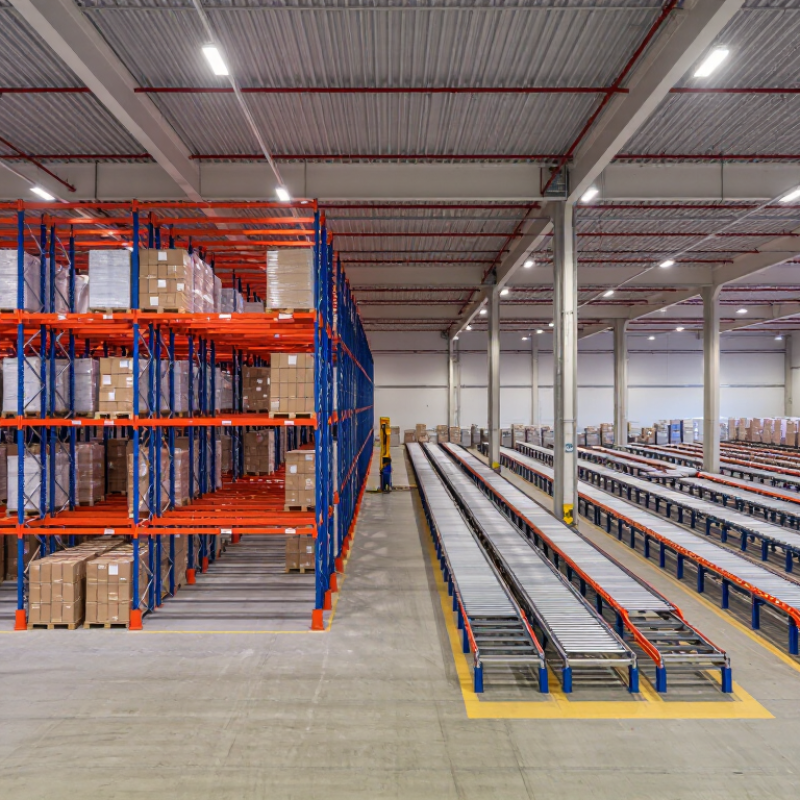
2026 Best Pallet Warehouse Racking Systems for Sale?

What Pallet Warehouse Racking Systems Are and How They Work

2026 Best Pallet Warehouse Racking Systems for Sale?

What Pallet Warehouse Racking Systems Are and How They Work

Pallet warehouse racking is a steel framework that stores palletized goods above the floor. Upright frames support horizontal beams, creating levels for forklifts to load and retrieve pallets. In selective racking, each pallet position is directly accessible. Other layouts use deeper lanes to store more pallets, but access becomes less flexible. The right design depends on inventory variety, pallet dimensions, forklift type, and aisle space.

Think of a busy aisle: a forklift lifts a pallet, aligns it with a beam level, and sets it onto the supports. Safe operation relies on correctly matched components, visible load limits, and sound floor conditions. MHI’s 2024 Annual Industry Report surveyed more than 1,000 supply-chain professionals, documenting the sector’s attention to technology and operational change. Racking remains the physical foundation; automation cannot fix a poorly planned layout. A neat drawing is not enough.

Tips: Measure actual pallet loads, including overhang, before selecting beam lengths. Keep load signs readable, inspect for bent uprights, and follow the rack supplier’s capacity guidance. Leave room for forklift turning. Small mismatches matter.

Main Types of Pallet Racking Systems Available in 2026

Warehouse layouts in 2026 still rely on several distinct pallet racking systems. Selective racking gives forklifts direct access to each pallet, making it practical for varied stock and frequent picking. It is easy to adapt, but its wider aisles can reduce storage density. Double-deep racking stores pallets in two positions, increasing capacity while requiring compatible reach equipment and less immediate access to rear loads.

Drive-in racking uses deep lanes to store pallets with fewer aisles. It can suit large batches of similar products, though the loading sequence may limit access to older stock.
Push-back systems place pallets on nested carts, allowing several pallets per lane with access from one aisle.
Pallet flow racking uses inclined rollers to move loads toward the picking face. It can support first-in, first-out rotation, but rollers need careful upkeep. Small alignment problems matter.
For long or irregular items, cantilever racks use open arms instead of standard pallet beams.

The right choice depends on inventory turnover, pallet dimensions, forklift reach, and floor layout—not storage density alone. Check load ratings and inspect beams, uprights, and connections regularly. A drawing may look efficient. Real traffic can prove otherwise. Aisle width, turning space, and changing inventory deserve a close review before installation.

How to Match a Racking System to Warehouse Requirements

2026 Best Pallet Warehouse Racking Systems for Sale?

How to Match a Racking System to Warehouse Requirements

The right pallet racking depends on more than floor space. Measure pallet width, depth, and loaded height, then record the heaviest load. Check clear ceiling height, sprinkler clearance, floor condition, and forklift turning space. A rack that looks compact on a drawing may block a real aisle. Test the layout with your actual equipment.

Next, match storage design to inventory movement. Selective rack gives direct access to each pallet, while drive-in layouts trade access for higher density. For mixed products and frequent picking, that trade-off may slow work. The 2024 MHI Annual Industry Report found that 55% of surveyed supply-chain professionals planned to adopt artificial intelligence within five years. This points to growing interest in technology, not a reason to automate every rack. Start with your SKU count, pallet positions, and daily pallet moves.

Then confirm the rack’s rated capacity and structural design with a qualified supplier or engineer. Use applicable rack-design standards, and protect exposed uprights near forklift routes. Don’t rely on estimates alone. A practical site survey can reveal uneven floors, low beams, or turning bottlenecks that a spreadsheet misses. Revisit the plan as inventory changes; a layout that works today may become awkward next season.

2026 Best Pallet Warehouse Racking Systems for Sale? - How to Match a Racking System to Warehouse Requirements

Racking System Typical Storage Depth Inventory Access Storage Density Best Fit Equipment and Layout Considerations Key Trade-Off
Selective pallet racking One pallet deep per rack face Direct access to each pallet; supports mixed SKUs and frequent picking Lower than systems that store multiple pallets deep Warehouses with many SKUs, variable inventory, or high selectivity requirements Uses conventional forklift trucks. Aisle width depends on the truck, load size, rack height, and operating clearances. Easy access and flexible slotting, but more aisle space may be needed.
Double-deep racking Two pallets deep per rack face Front pallets are directly accessible; rear pallets require moving the front pallet Higher than selective racking when inventory and aisle layout suit the system Warehouses holding several pallets per SKU with moderate turnover Typically needs a reach truck or another suitable deep-reach handling solution. Plan for compatible pallet sizes and operating clearances. Uses floor space more efficiently than selective layouts, with reduced access to rear positions.
Drive-in / drive-through racking Multiple pallets deep within each lane Drive-in lanes are generally loaded and unloaded from one end (LIFO). Drive-through lanes can be accessed from both ends and may support FIFO operation. High, because fewer operating aisles are required between storage lanes Large quantities of the same SKU, including suitable batch or seasonal inventory Forklifts enter the rack lanes. Design must account for truck dimensions, pallet condition, lane depth, guidance, and impact protection. High density, but fewer immediately accessible SKUs and more demanding truck operation.
Push-back racking Typically several pallets deep on inclined carts or rails Usually loaded and unloaded from the same aisle; pallets move forward as the front pallet is removed (LIFO) High compared with selective racking Multiple pallets per SKU where rapid access to every individual pallet is not essential Forklifts work from the aisle rather than driving into the storage lane. Pallet dimensions and weights must suit the designed carts or rails. Improves density and aisle productivity, but does not provide FIFO pallet rotation.
Pallet flow racking Multiple pallets deep on gravity-flow lanes Typically loaded at one end and picked at the other; supports FIFO when correctly configured High, with separate loading and picking aisles High-throughput operations, date-sensitive products, or inventory requiring FIFO rotation Requires compatible pallets, controlled loading practices, and properly designed rollers, brakes, and lane capacity. Supports orderly rotation and high throughput, but is more specialized than static racking.
Mobile pallet racking Usually one pallet deep per rack face, with racks mounted on movable bases Direct access to a selected aisle; other aisles open as needed High floor-space utilization by reducing the number of permanently open aisles Warehouses with limited floor area, moderate access frequency, or valuable storage space Requires a suitable floor, mobile-base installation, aisle controls, and safety systems. Access is generally to one open aisle at a time. Can increase storage capacity in a given footprint, but access and retrieval may be slower than with multiple fixed aisles.

Planning note: These are general system characteristics, not guaranteed capacity or performance figures. Final selection should be based on SKU count, pallets per SKU, inventory rotation, throughput, pallet and load dimensions, building clear height, floor conditions, fire protection, handling equipment, and applicable local codes. Rack capacity and configuration must be verified by a qualified rack designer or engineer.

Load Capacity, Safety, and Installation Considerations

2026 Best Pallet Warehouse Racking Systems for Sale?

Load capacity begins with the actual load, not the rack’s advertised maximum. Record each pallet’s weight, dimensions, and load distribution, then confirm beam, upright, and bay capacities for the proposed configuration. A uniformly distributed load rating may not cover a heavy item concentrated near one edge. Ask for written capacity data and clearly visible load plaques. ANSI MH16.1, the Rack Manufacturers Institute’s specification for industrial steel storage racks, provides a technical basis for rack design. Still, the installed layout must match the approved design.

Safety depends on more than steel strength. OSHA estimates that powered industrial truck incidents cause about 85 fatalities and 34,900 serious injuries annually in the United States. Forklift impacts can damage uprights, so protect exposed rack ends and inspect them regularly. Installation should include a suitable, verified floor slab, correctly placed anchors, plumb frames, and clear aisles. Check sprinkler and lighting clearances before fixing the layout. Even a neat drawing can miss a low beam or uneven floor; that deserves a second look.

Tips: Photograph upright damage, isolate affected bays, and get a competent person to assess repairs. Never assume a bent frame is safe because it still holds a pallet. Before purchasing, request installation drawings, capacity labels, and inspection guidance. Keep the final configuration consistent with those documents.

How to Compare Pallet Racking Systems for Sale in 2026

How to Compare Pallet Racking Systems for Sale in 2026

Compare systems against your actual loads, not just the advertised price. Record each pallet’s weight, height, and overhang, then check beam capacity and rack-bay dimensions. Confirm the floor condition, clear ceiling height, sprinkler clearance, and forklift turning space. A rack that fits on paper may narrow an aisle or block a sprinkler head in the building. Measure twice.

The MHI 2024 Annual Industry Report found that 55% of surveyed supply-chain professionals expected robotics and automation to provide a competitive advantage within five years. That makes future equipment access worth checking, even if automation is not planned today. Ask whether rack layout, aisle width, and beam positions can support your likely material-handling equipment. Compare installation, inspection, repair, and expansion costs alongside the purchase price.

Request load-rating documentation and a layout based on your site measurements. Check that quoted capacities match the proposed beam lengths and storage configuration; capacity can change with small design differences. Also compare upright protection and the availability of replacement components. A tidy quotation is reassuring, but it does not replace a competent site review. One detail is easy to miss: uneven floors can affect installation and rack alignment. Cite the report, but verify every specification against your own operation.

FAQS

Which pallet racking system offers direct access to every pallet?

Selective racking lets forklifts reach each pallet directly. It suits mixed stock and frequent picking, but wider aisles reduce storage density.

When is double-deep racking a practical choice?

It stores pallets two positions deep and can increase capacity. You need compatible reach equipment, and rear pallets are less accessible. Check how often those loads move.

What products suit drive-in or push-back racking?

Drive-in racking can suit large batches of similar products. Push-back systems store several pallets per lane, accessed from one aisle. Loading order matters.

How does pallet flow racking support stock rotation?

Inclined rollers move pallets toward the picking face and can support first-in, first-out rotation. Keep the rollers aligned and maintained. Small faults matter.

What measurements should I collect before choosing a system?

Measure pallet width, depth, loaded height, and weight. Also check ceiling clearance, sprinkler space, floor condition, and forklift turning room. Measure twice.

Is the densest layout always the best option?

No. A dense layout may slow picking or create awkward forklift turns. Check daily pallet moves, inventory variety, and aisle traffic. Paper plans can mislead.

What should I check when comparing rack proposals?

Compare rated capacity, beam lengths, installation, repairs, inspections, and expansion costs. Request a layout based on site measurements. A low price proves little.

How should I plan for changing equipment or inventory?

Check whether aisle widths and beam positions can suit likely equipment later. Revisit the layout as inventory changes. I might be overvaluing flexibility, but it deserves a check.

Conclusion

Pallet Warehouse Racking systems organize palletized goods in vertical storage locations, helping warehouses use available floor space and manage inventory efficiently. In 2026, common options include selective, double-deep, drive-in, push-back, and pallet-flow racking. Each design offers a different balance of storage density, product access, and inventory rotation, so the right choice depends on the warehouse’s layout and day-to-day operations.

Before choosing a system for sale, consider pallet dimensions and weight, the types of handling equipment in use, aisle width, ceiling height, and how quickly products need to move. Check that the proposed configuration suits expected loads, and plan for suitable installation, inspections, and impact protection. Comparing systems by capacity, accessibility, space use, adaptability, and total project requirements can help identify a practical solution that supports safe and efficient warehouse operations.

Amelia

Amelia

Amelia is a dedicated marketing professional with extensive knowledge of the company’s products, services, and customer-focused solutions. With a strong understanding of market trends, user needs, and effective communication strategies, she helps present complex product information in a clear,......